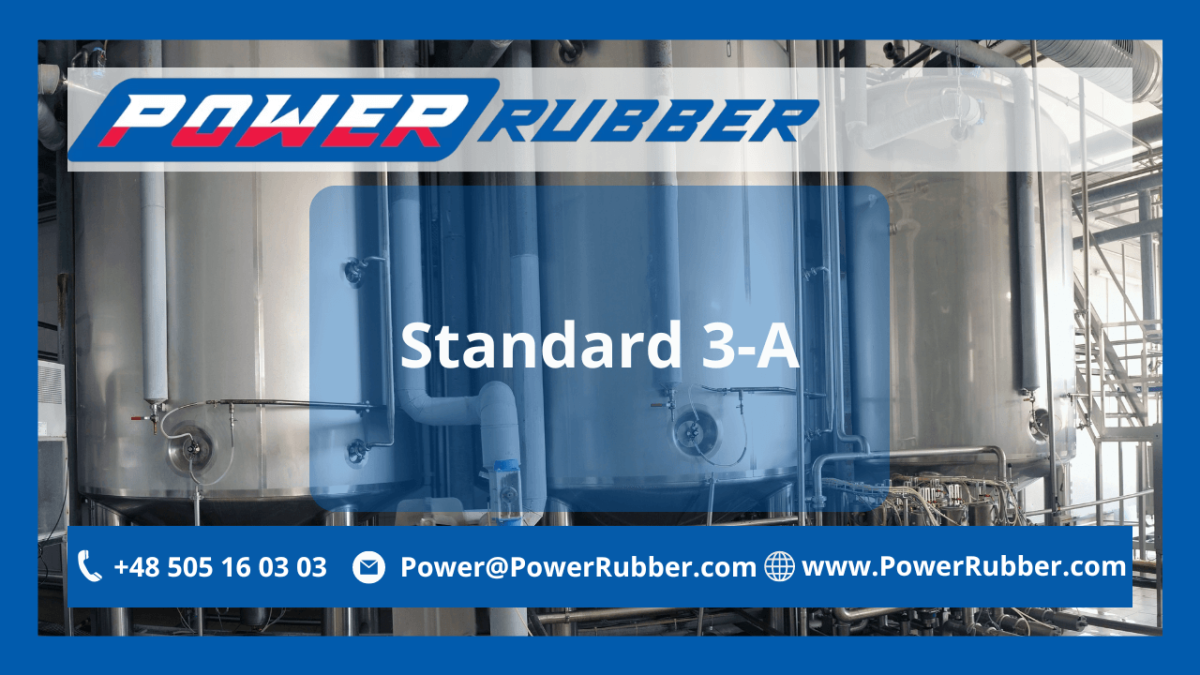
3-A Standard: Sanitary Requirements According to 3-A Sanitary Standards
Standard 3-A - what is it?
Standard 3-A (3-A Sanitary Standards Inc.), is also called the 3-A sanitary standard. It was developed in the 1920s by three cooperating groups: professional sanitarians, equipment manufacturers, and an interest group - processors.
Initially the standards contained therein concerned the design of equipment used in the dairy industry. Today manufacturers and food processors also use more rigorous and uniform sanitary standards that define the design and manufacturing criteria for equipment that comes into contact with food.
Example: 3-A hygienic valves are widely used, among others, in the food industry, cosmetics, winemaking, where maintaining high hygienic parameters of process installations is important. 3-A hygienic valves with pneumatic actuators are produced exclusively from stainless steel of the aisi 316l grade. The spherical shape and polishing of the internal parts guarantee that they have self-cleaning properties.
3-A Sanitary Standards Inc. (3-A SSI) is an American, independent non-profit organization. Currently more than 360 companies from the USA and 22 companies from other countries around the world have the right to place the 3-A mark on various types of processing equipment.
At Power Rubber you can buy silicone products that meet the 3-A standard.
The purpose of the 3-A sanitary standard is to:
-
increase food safety by designing hygienic equipment;
-
protect food (e.g., dairy products) intended for human consumption from contamination;
-
ensure consumers that all surfaces that have direct contact with the product can be cleaned mechanically, and also be disassembled manually for detailed inspection
-
facilitate the disassembly of individual surfaces for cleaning
-
improve hygiene in the biotechnology, dairy, food and beverage industries, and in the production of pharmaceuticals;
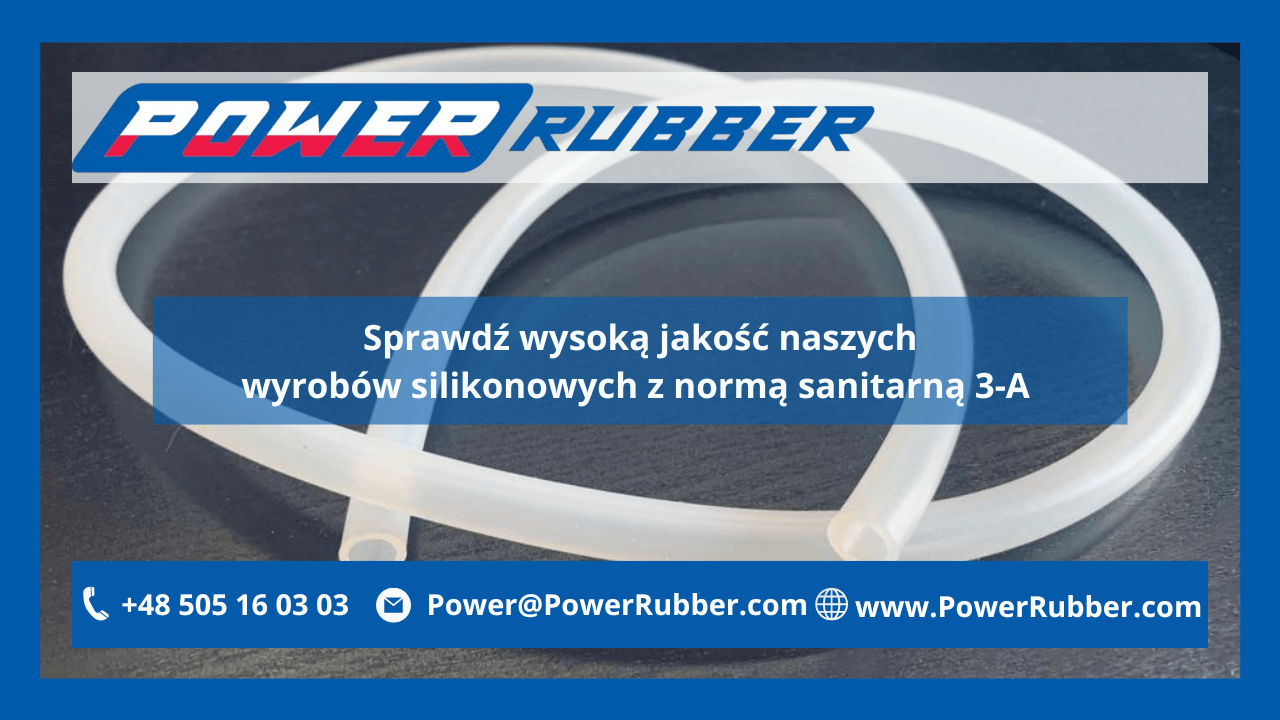
Silicone hoses and tubing with FDA approval and 3-A certification can be found here.
Whether in the food industry, the beverage production industry or in dairying, surfaces that come into contact with food must be non-toxic, non-absorbent, and corrosion resistant. Moreover, according to the hygienic 3-A standard the surface should be smooth, easy to clean and free of lead or lead solder (a metal alloy whose basic components are lead (Pb) and tin (Sn)).
Various guidelines are aimed at ensuring the high quality of products that reach the end user. The certificate held by a company indicates that only the theoretical design requirements have been met (e.g., the detailed method of making creases and the required surface finish). There are 70 A-3 sanitary standards and 9 accepted A-3 practices.
Standard 3-A and EHDG
EHDG (European Hygienic Equipment Design Group) is a foundation whose main task is to ensure safety and support hygienic design in all areas of food production. The EHDG certificate is recognized in Europe.
The main differences between 3-A SSI and EHDG concern the requirements regarding the construction of hygienic equipment. As mentioned earlier, to obtain the 3-A certificate one must meet the design requirements; in the case of EHDG - one must meet the theoretical design requirements and also carry out standard hygienicity tests. 3-A specifications are more detailed.
Each of these certificates has the same goal, namely: to implement hygienic practices in the food and pharmaceutical industries. This allows maintaining high standards of cleanliness in production and packaging processes.
In our store both silicone O-rings and silicone sheets covered by the 3-A standard are available.
We guarantee fast order fulfillment.
Do you need more information about our products?
If you have any questions, please contact us by phone at: +48 22 292 40 24 or +48 505 16 03 03, or by email (Power|PowerRubber.com| style="background-color: rgb(255, 255, 255); color: rgb(0, 91, 171); border-bottom: 1px dotted rgb(0, 91, 171); text-align: justify;"|Power|PowerRubber.com) or through our contact form.