Gasket: what to do, how to cut or make a gasket?
Gaskets are an indispensable element of many mechanisms and devices, providing tightness and preventing leaks. Whether we're dealing with a seal in an engine, carburetor, or thermostat housing, the right gasket is crucial for the proper functioning of the whole. But what to do when the original gasket is damaged and buying a new one is impossible or uneconomical? In such a situation there is a need to make or cut a gasket yourself. In this article we will look at different types of gaskets and the materials they can be made from, and we will also discuss methods of cutting gaskets by hand.
If you need professional help with making or cutting technical gaskets, contact us – we offer a precision gasket cutting service to size. Please contact us by phone at +48 22 292 40 24 or +48 505 16 03 03, by e-mail (power|powerrubber.com| |Power|PowerRubber.com) or via our contact form
Types of gaskets
There are many types of gaskets, differing in material, construction and application. The choice of the right gasket depends on the operating conditions, such as pressure, temperature and the type of sealed substance. The most common are rubber, paper and silicone gaskets, but there are also gaskets made from other materials such as felt, cork or fibra. Each of these materials has specific properties that predispose it to certain applications.
Rubber gaskets
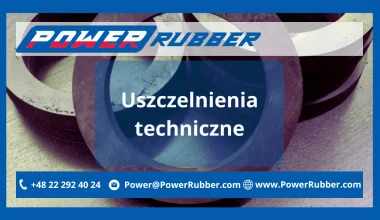
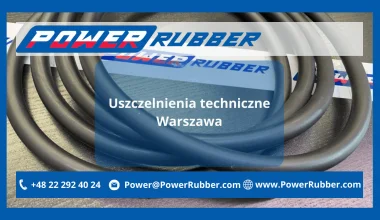
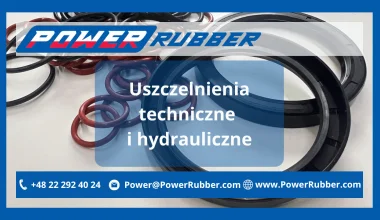
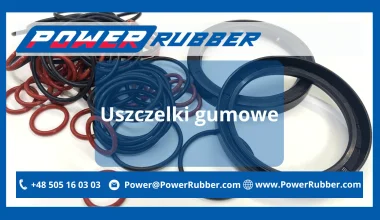
Rubber gaskets are technical elements with wide application in industry, automotive, hydraulics and construction. They are characterized by high flexibility, resistance to deformation and durability in demanding working conditions. The appropriate choice of rubber compound determines the chemical, temperature and mechanical resistance of the finished gasket. Depending on the application, various rubber compounds and technical elastomers are used, whose properties are presented in the table below:
| Type of rubber compound | Characteristics and applications |
|---|---|
NBR (nitrile rubber) | Resistant to oils, fuels, greases and hydraulic fluids. Used in hydraulics, pneumatics, engines and industrial equipment. It is distinguished by high tightness and abrasion resistance. |
EPDM (ethylene-propylene rubber) | High resistance to weathering, ozone, steam and UV radiation. Ideal for water installations, sanitary applications and outdoor uses. |
SBR (styrene-butadiene rubber) | A universal compound with good mechanical resistance, used in general-purpose gaskets. It is characterized by flexibility and durability. |
FKM / Viton® (fluorocarbon rubber) | Resistant to aggressive chemicals, fuels and high temperatures (up to +200°C). Used in the chemical, petrochemical and automotive industries. |
| VMQ (silicone) | A flexible material resistant to extreme temperatures (from –60°C to +230°C). Chemically inert, approved for contact with food and medical applications. |
HNBR (hydrogenated nitrile rubber) | An improved version of NBR with increased resistance to oils, greases, ozone and high temperatures. Used in the automotive industry and hydraulic power systems. |
PTFE (Teflon / polytetrafluoroethylene) | A material with exceptional chemical resistance, a low coefficient of friction and a wide operating temperature range (from –200°C to +260°C). Used for gaskets that require resistance to aggressive media and high pressure. |
Rubber gaskets and technical gaskets made from the materials above are used in static and dynamic connections, including systems operating under pressure. In bearings, shafts and hydraulic systems, rubber rings, O-rings and oil-resistant gaskets are used, which guarantee tightness, durability and resistance to operating factors.
Paper gaskets
Paper gaskets are a popular solution used in places where a thin, precise seal is required without high mechanical loads. They are made from gasket paper about 1 mm thick, which, thanks to its structure, adapts well to the mating surface. They are characterized by low cost, ease of processing and quick installation, which is why they are often used in workshops and the production of technical components. Before installation, the paper can be coated with a thin layer of grease or silicone, which increases the tightness of the joint and facilitates later disassembly. Paper gaskets work well in applications where there are no high pressures or temperatures – for example in thermostat housings, carburetors, engine covers and gearbox housings. This is an economical, lightweight and effective solution in many technical applications.
Silicone gaskets
Silicone gaskets are precision technical elements with exceptional resistance to temperature, UV radiation, ozone and chemical agents. Made from high-quality technical silicone (VMQ), they retain elasticity over a wide temperature range – from about –60°C to +230°C, which allows them to be used in conditions where other materials deform or lose tightness. Thanks to excellent adhesion to various surfaces, silicone gaskets provide durable, tight and aging-resistant joints.
They are used in the automotive, chemical, food, medical and electronic industries, where high cleanliness and material reliability are required. Silicone gaskets are excellent for engines, heating devices, sanitary installations, as well as laboratory equipment and industrial apparatus. Their insulating properties and resistance to extreme conditions make them one of the most durable and versatile solutions in the field of technical sealing.
What to make a gasket from? Which material to choose?
Rubber: properties and applications
Rubber is a popular material for cutting gaskets because of its flexibility and ability to seal joints. Rubber gaskets, including rings, are resistant to oils and greases, so they can be used in engines. They provide good and reliable sealing, even under pressure. From different types of rubber compounds you can make a gasket that fits the surface well and is resistant to leaks.
How to choose the right material to cut a gasket for a specific application?
The choice of material for making a technical gasket depends directly on the operating conditions of the system, the type of working medium, temperature and pressure. In automotive applications such as engines, oil pumps or gearboxes, NBR or FKM (Viton®) rubber compounds work best, as they are resistant to oils, fuels and greases. In places exposed to contact with water or steam, such as cooling systems or thermostat housings, EPDM or VMQ silicone are used, guaranteeing resistance to high temperature and thermal ageing. For light joints where there is no high pressure, e.g. in carburetors or technical covers, paper gaskets about 1 mm thick are sufficient and easy to cut by hand. In every case, it is crucial that the material ensures tightness, chemical resistance and durability in the working environment.
How to make a gasket yourself?
Tools needed to cut gaskets
To make a gasket yourself, you need the right tools. These include a cutting knife, scissors, hammer, centre punch, a hole punch for making holes for bolts, a sheet of material (paper, rubber, silicone). A template or an old gasket as a pattern is also useful. It is important that the knife is sharp to precisely cut the gasket. If we want to make a gasket, we must have something to cut it with.
Gasket cutting process step by step
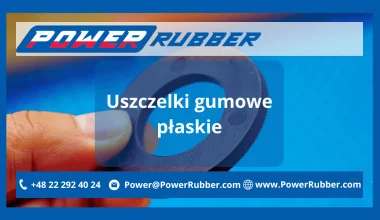
The gasket cutting process step by step begins with preparing the template. You can use an old gasket or draw the pattern on cardboard. Then we place the template on the sheet of material and trace it. Using a sharp knife we cut the gasket along the outline. We use a hole punch to make holes for the bolts. The finished gasket can be lightly coated with a thin layer of grease before installation. Cutting a gasket by hand requires precision.
Examples of gaskets for DIY
Examples of gaskets for DIY include gaskets for the carburetor, thermostat housing, exhaust manifold, water pump or cylinder. For the carburetor and thermostat housing a paper material is sufficient, because the pressure there is not high. For the engine it is best to use rubber or silicone. Cutting a cylinder gasket requires greater precision.
Selecting and purchasing a gasket
Where to buy a gasket?
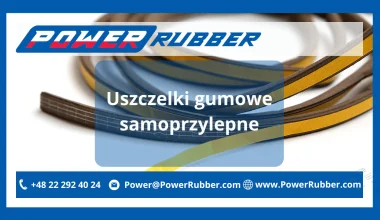
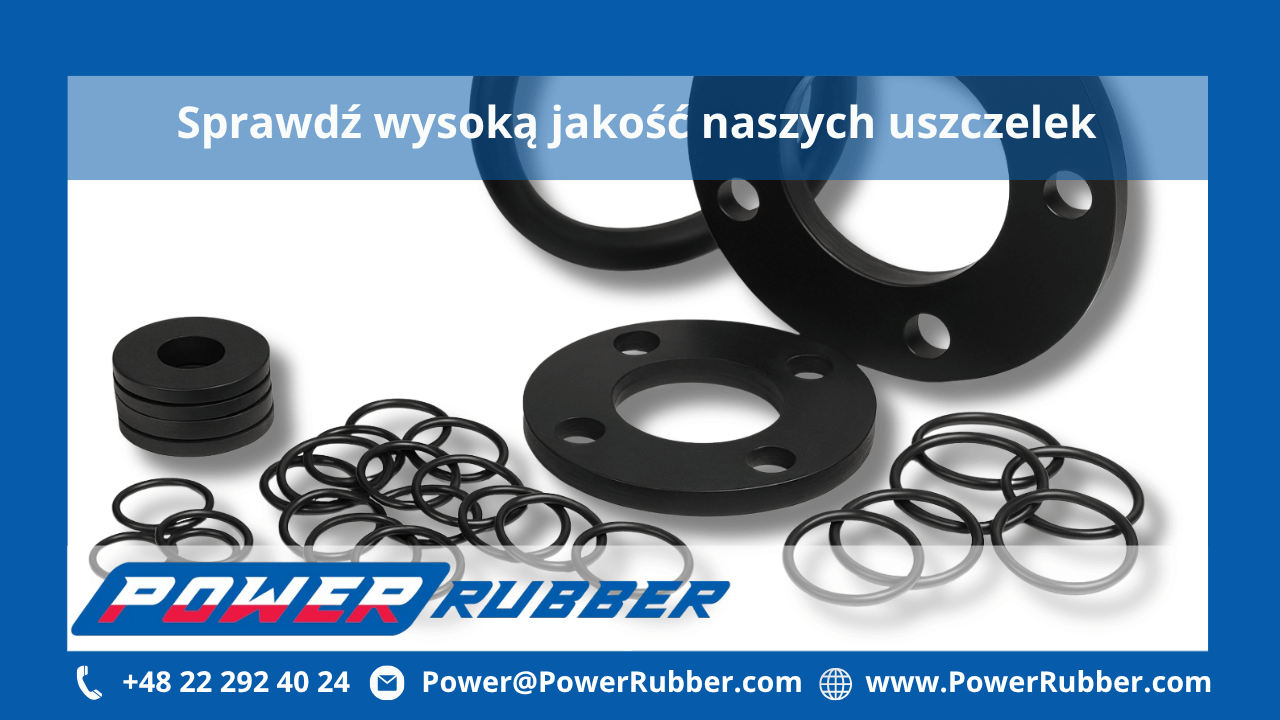
A gasket can be purchased in many places, but it is crucial to choose trusted suppliers offering products with appropriate technical parameters. In the POWER Rubber store there are technical gaskets, rubber O-rings, as well as flat and flange gaskets made of high-quality materials such as NBR, EPDM, FKM (Viton), silicone, PTFE or gasket sheets.
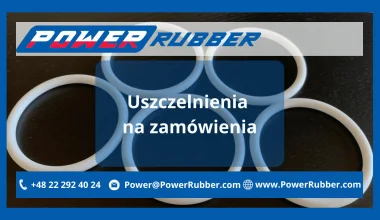
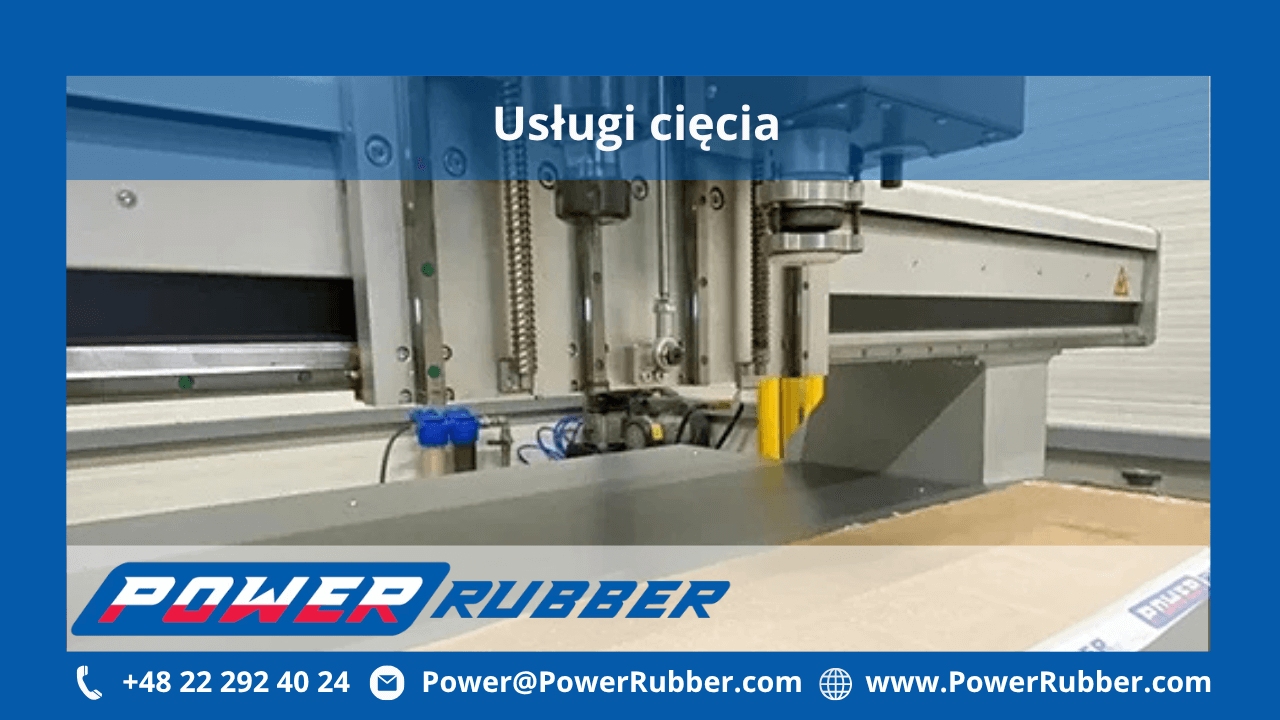
For customers needing non-standard elements, POWER Rubber offers a precision cutting service for custom gaskets – both from sheets and from gasket plates. Thanks to modern CNC cutting technology and experience in the production of technical seals, each gasket can be made exactly according to the customer's dimensions and specifications.
What characteristics should a good gasket have?
A good technical gasket must provide complete tightness and resistance to the working conditions in which it will be used. It should exhibit:
- Resistance to high temperature and pressure,
- Resistance to oils, fuels, water, steam or chemicals (depending on the application),
- Flexibility and resilience, which allow it to conform to surfaces,
- Dimensional stability even during long-term operation.
Engine gaskets should be made of materials resistant to engine oils and high temperatures – e.g. NBR, FKM or high-temperature silicone. Meanwhile, gaskets for fuel systems and carburetors require resistance to gasoline and petroleum-based substances, so FKM (Viton) or special rubber compounds with increased chemical resistance work well there.
What to pay attention to when buying a gasket?
When choosing a gasket you should always consider:
- The type of medium (e.g. oil, water, steam, fuel, air),
- Operating temperature range,
- Pressure level,
- Material of the mating component,
- Exact dimensions of the sealing area.
If in doubt about which type of gasket to choose, it is worth using the assistance of POWER Rubber specialists, who will advise on the selection of the appropriate solution and material.
For customers looking for non-standard solutions, there is the possibility of making gaskets based on a pattern, technical drawing or dimensions.
The company POWER Rubber specializes in the sale and production of technical gaskets, rubber O-rings and rubber components for industrial, automotive and hydraulic applications.
Contact us to get an offer tailored to your needs: by phone at +48 22 292 40 24 or +48 505 16 03 03, by e-mail (power|powerrubber.com| |Power|PowerRubber.com) or via our contact form