Gaskets for flange connections - a complete, practical guide
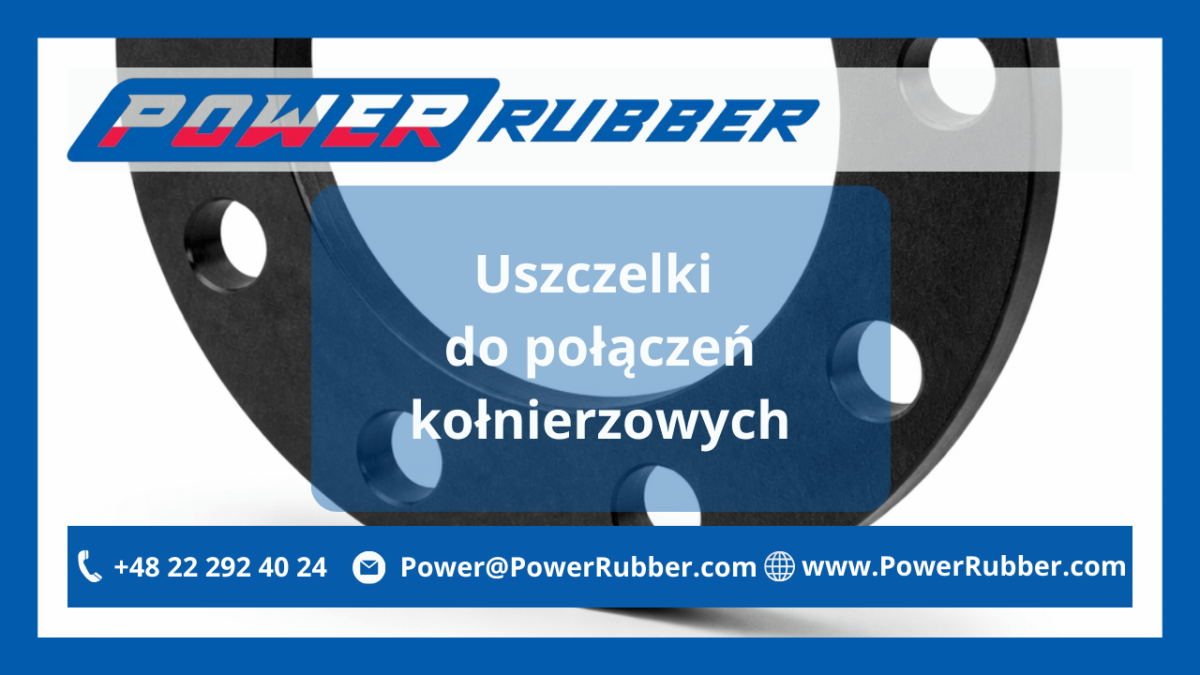
Gaskets for flange connections are one of the most important elements ensuring the tightness of water, heating, industrial and technical installations. At Power Rubber we specialize in the production and supply of rubber gaskets and gaskets cut from elastomer sheets, therefore this article presents practical and substantive information regarding types, materials and principles for selecting flange gaskets, prepared clearly and usefully for people working with piping installations.
What are gaskets for flange connections?
Flange gaskets are elements mounted between two pipe or equipment flanges. Their tasks are to:
-
ensure the tightness of the connection,
-
compensate for minor surface irregularities,
-
prevent medium leaks,
-
allow easy assembly and disassembly of the installation.
In water, heating and industrial installations, rubber gaskets and gaskets made from elastomer sheets are most commonly used, which perform excellently at low and medium pressures.
Standards and norms for flange gaskets
Standards that define the dimensions, type and application of gaskets for specific types of flanges are important for flange gaskets. The most important include:
- PN-EN 1514-1:2025-01 – specifies the dimensions of non-metallic flat gaskets with or without inserts, intended e.g. for flanges compliant with EN 1092-1,
- PN-EN 12560-1:2025-01 – concerns non-metallic flat gaskets for flanges with a pressure rating,
- PN-EN 1092-1 – specifies requirements for circular steel flanges with a PN designation, including their dimensions and sealing surfaces.
When selecting a gasket, you should check not only the standard itself but also the DN, PN or pressure class, the type of sealing surface and the operating conditions of the installation.
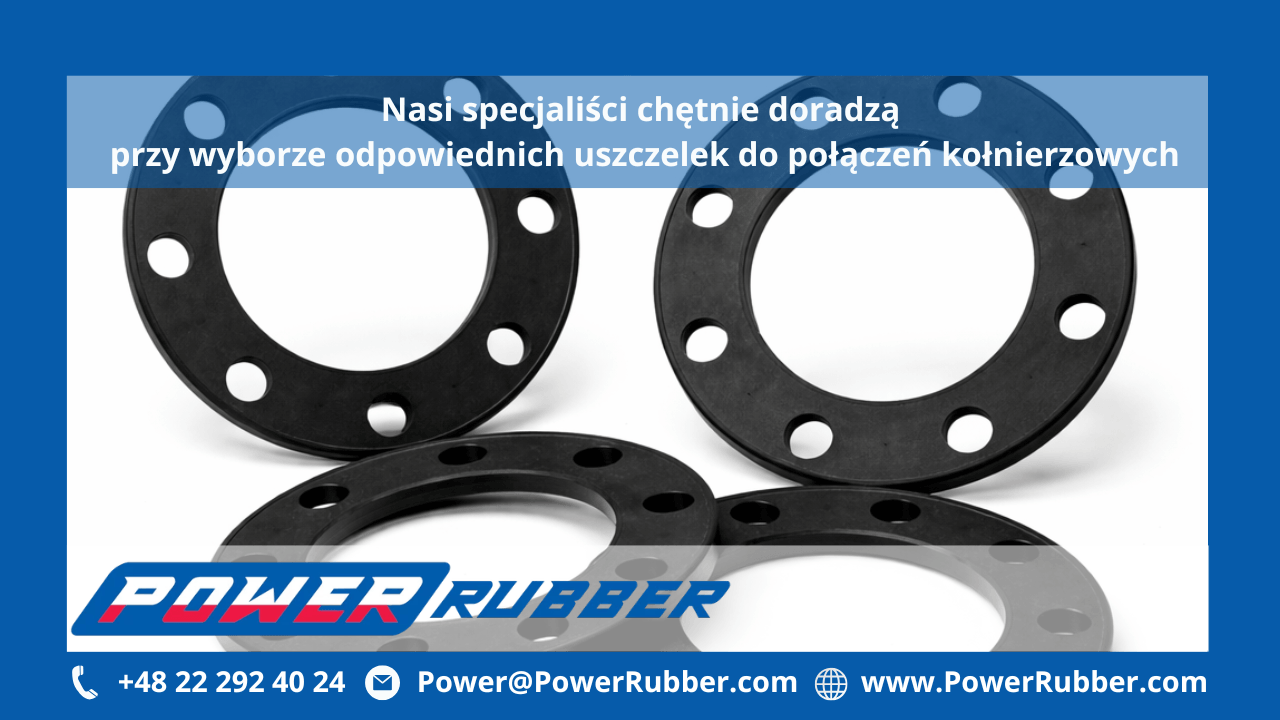
Types of flange gaskets available at Power Rubber
Rubber gaskets
Most often chosen for installations:
-
water,
-
sewer,
-
heating,
-
industrial with low and medium pressure.
We manufacture them from various types of rubber:
-
SBR – for water and general technical applications,
-
NBR – for oils, fuels and petroleum-derived substances,
-
EPDM – resistant to weathering, low-temperature steam and water,
-
Silicone – for food, sanitary and high-temperature applications.
Gaskets from elastomer sheets
Precisely cut to size, in accordance with the standard or the customer's design. Ideal for:
-
industrial installations,
-
technical equipment,
-
non-standard flange connections.
Custom gaskets
Power Rubber offers the possibility of manufacturing gaskets:
-
according to a technical drawing with specified dimensions and dimensional tolerances,
-
based on a supplied sample,
-
in any shape and thickness,
-
in single-piece or series production.
This is an ideal solution for service, production and maintenance companies.
Flange gasket materials – what to choose?
SBR rubber
-
resistant to water and weathering,
-
used in water and general installations.
NBR rubber
-
resistant to oils, fuels and greases,
-
used in industrial and hydraulic installations.
EPDM rubber
-
resistant to low-temperature steam, water and UV,
-
ideal for outdoor and heating installations.
Silicone rubber
-
high thermal resistance,
-
approved for contact with food,
-
used in the food and pharmaceutical industries.
How to select a flange gasket?
1. Determine the medium
-
water - SBR or EPDM,
-
oils - NBR,
-
low-temperature steam - EPDM,
-
food and pharmaceuticals - silicone.
2. Check temperature and pressure
Rubber gaskets are ideal for low and medium pressures and temperatures typical for water and industrial installations.
3. Choose the standard and dimension
The gasket must correspond to:
-
the flange DN,
-
the flange PN,
-
the manufacturing standard (e.g. PN-EN 1514).
4. Pay attention to operating conditions
-
vibrations,
-
frequent disconnections,
-
exposure to UV or chemicals.
Most common mistakes when using rubber gaskets
-
selecting the wrong material (e.g. SBR for oil),
-
using gaskets outside their temperature range,
-
installation on dirty or corroded flanges,
-
over-tightening or under-tightening bolts,
-
reusing the gasket.
Good installation practices
-
clean the flange surfaces,
-
center the gasket,
-
tighten bolts evenly, "in a cross pattern",
-
use the appropriate tightening torque,
-
use gaskets only once.
Why choose rubber gaskets from Power Rubber?
-
precise CNC production,
-
a wide selection of materials,
-
compliance with PN-EN standards,
-
fast order fulfillment,
-
possibility to manufacture custom gaskets,
-
technical advice.
Gaskets for flange connections available at Power Rubber
At Power Rubber you will find a wide selection of flange gaskets made from:
-
SBR, NBR, EPDM and silicone rubber,
-
elastomer sheets,
-
materials matched to specific media and operating conditions.
We produce gaskets in accordance with PN-EN 1514, EN 1092-1 standards as well as non-standard custom orders.
Order flange gaskets at Power Rubber
If you need durable, precisely manufactured and matched to your installation flange gaskets — contact Power Rubber.
Order now or request a quote: +48 22 292 40 24 or +48 505 16 03 03, or by email (Power|PowerRubber.com| style="background-color: rgb(255, 255, 255); color: rgb(0, 91, 171); border-bottom: 1px dotted rgb(0, 91, 171); text-align: justify;"|Power|PowerRubber.com) or via our contact form.