Food Industry Gaskets – What They Are and Why Choose Them?
Rubber seals are used to seal the contact of cooperating surfaces or joints. They prevent leaks of the process medium and the ingress of contaminants into the system. They are extremely flexible and capable of deforming. They can be stretched or compressed without risk of damage or deterioration of their properties. They are manufactured from various types of materials suitable for specific applications.
What are gaskets for the food industry?
Gaskets for the food industry provide a reliable seal between two or more components or surfaces. They create a tight barrier that protects against leaks of products and ingredients outside the system and the penetration of unwanted substances into food. Food-grade gaskets withstand high pressure, extreme temperatures, steam and chemicals. They guarantee the quality, safety and efficiency of production processes. Gaskets used in the food industry must meet strict legal requirements and comply with hygiene and safety standards.
At Power Rubber we are able to manufacture food industry gaskets from a variety of materials dedicated to specific requirements, which are characterized, among others, by:
-
resistance to elevated temperatures
-
resistance to chemicals used in machine and equipment cleaning regimes
-
resistance to processed foods and beverages
-
compatibility with various types of food (fats, oils, acids)
-
unique mechanical properties
Regulations regarding gaskets in the food industry
To prevent the migration of harmful substances or rubber particles into food and to minimize the risk of contamination during the production process, the type of gasket that comes into direct contact with food must be chosen carefully.
Rubber gaskets for contact with food and drinking water must be made from materials that meet the strict legal requirements of the European Union (Regulation No 1935/2004) and the regulations of the U.S. Food and Drug Administration (FDA). It is also worth ensuring whether rubber products (e.g. rubber sheets, cords and rubber profiles, flat gaskets, o-ringsand) have a PZH hygiene certificate.
Material and quality standards concerning the safe approval of rubber products used with drinking water also include approval such as WRAS or KTW.
Meanwhile, Standard 3A was initially developed specifically for the dairy industry, but it is now used by manufacturers and processors in various branches of industry, including the food, cosmetics and winemaking industries.
Food-grade rubber must be resistant to the action of various process media, including food products, water, steam and cleaning agents. At Power Rubber we offer food rubber gaskets with FDA certification that do not emit any harmful substances, and whose physical and chemical properties are adapted to work in difficult conditions and specific applications.
For more information about gaskets for the food industry, we encourage you to contact our sealing specialist by phone.
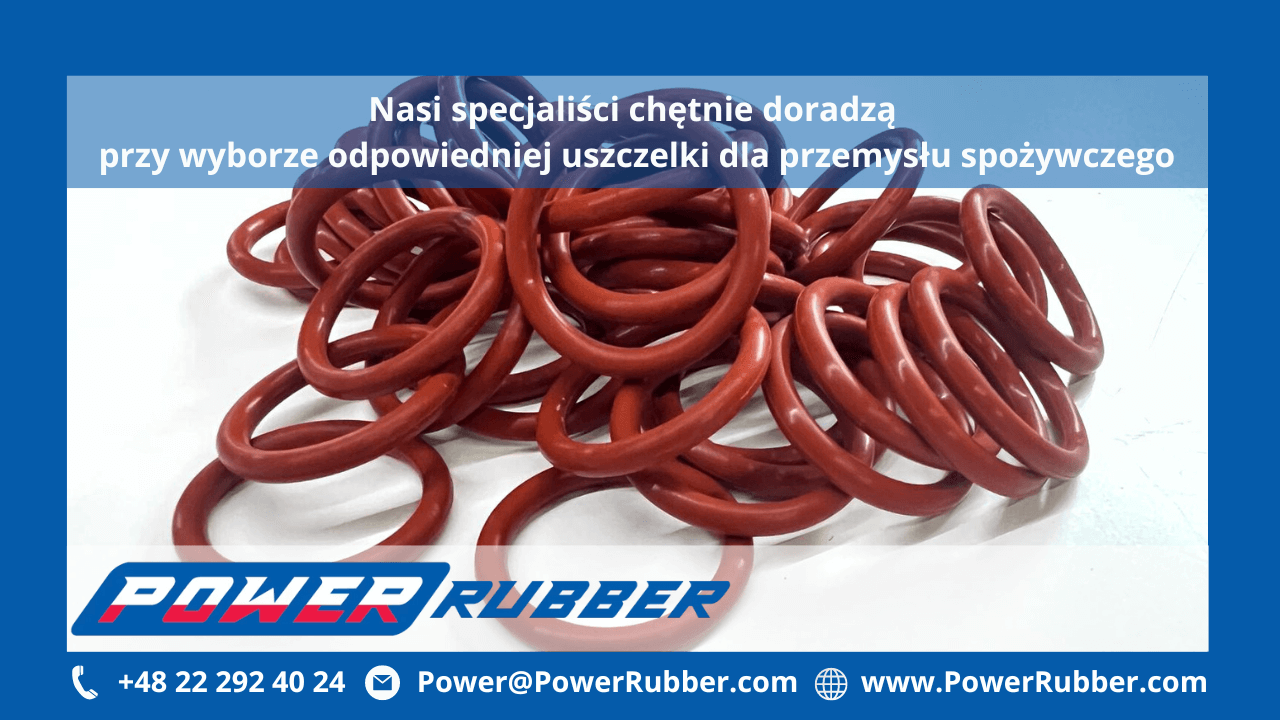
From what materials are gaskets for the food industry produced?
Choosing the right material is crucial to prevent contamination during the processing, handling and transport of various food products and ingredients. As mentioned earlier, materials for manufacturing gaskets in the food sector must meet strict requirements. In addition to compatibility with different types of food and resistance to aggressive media, they must also be resistant to high-temperature steam sterilization.
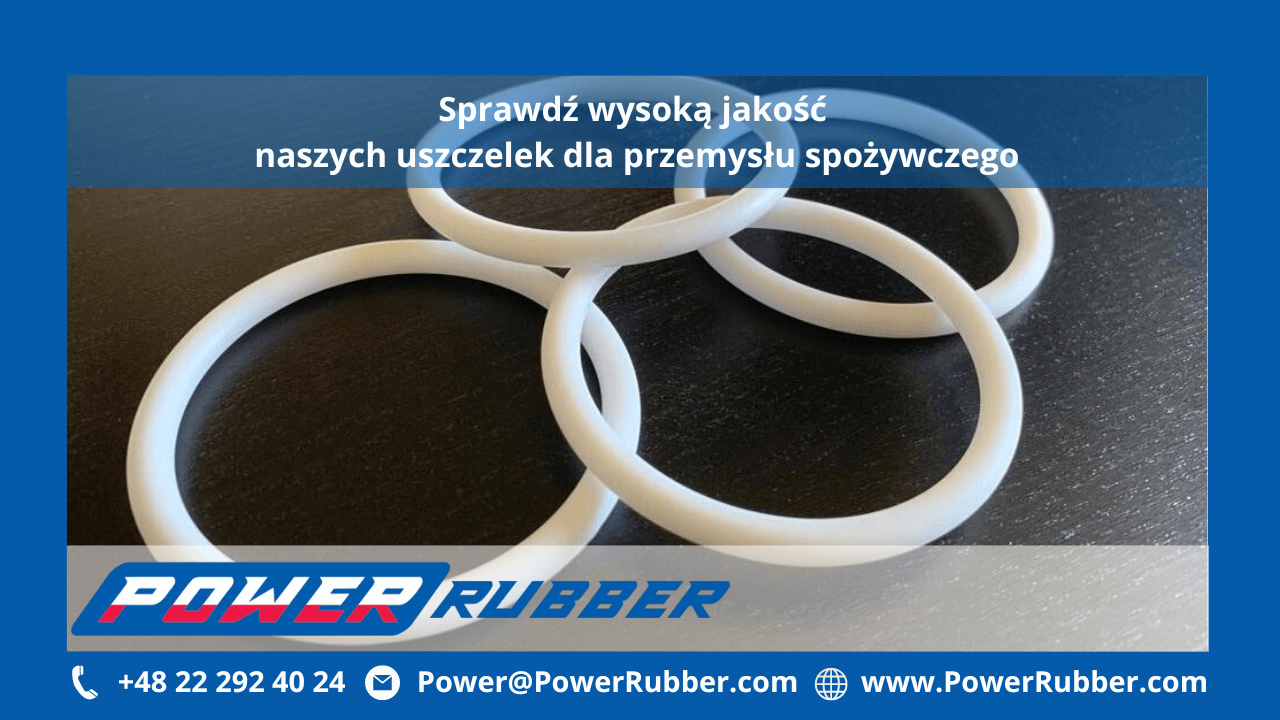
PTFE gaskets for contact with food
Due to their chemical and biological resistance, PTFE / Teflon® gaskets have wide applications in the food industry. They do not react with most chemicals (including aggressive cleaning and disinfecting agents) and food ingredients. Their hydrophobic properties prevent the growth of biological contaminants, including molds, bacteria, viruses and parasites.
This type of high-grade plastic is characterized by exceptional durability, a low coefficient of friction (abrasion resistance), resistance to high temperatures, corrosive chemicals and UV radiation. Teflon® gaskets operate in a wide temperature range from -200°C to 260°C, making them ideal for cold storage as well as high-temperature cooking. They withstand intensive cleaning and sterilization processes. They are well suited for dynamic applications, e.g. mixers. In food plants, resistance of seals to CIP (Cleaning in Place) processes, during which installations are cleaned without the need for disassembly, is also important.
Teflon gaskets are commonly used in food processing equipment (mixers, pumps, blenders), as well as in machine housings, pipe connections, high-speed conveyor systems and packaging equipment.
Types of rubber for contact with food
In this part of the article we discuss sealing materials used in food and beverage processing that meet legal requirements and are compatible, among others, with fats, oils and acids.
EPDM rubber
Food-grade EPDM gaskets are suitable for use in both the food and pharmaceutical industries. EPDM (ethylene-propylene-diene rubber) features excellent resistance to weathering and ozone, which allows it to be used outdoors. EPDM gaskets provide good resistance to animal and vegetable oils. They are non-toxic. They are suitable for use with alkaline and acidic cleaning agents. They are safe for use in contact with food. They are compatible with polar fluids, even at elevated temperatures.
They work very well in dairy applications, except for products with a high fat content. They are commonly used for applications related to processing, filling, dosing and conveying food. Typical applications: pumps, pipe and flange gaskets, valves and food fittings.
NBR rubber
NBR (nitrile butadiene rubber) is characterized by high mechanical strength and resistance, abrasion resistance and resistance to a wide range of chemicals. Food-grade NBR gaskets perform very well in contact with fats, animal and vegetable oils. They provide a low degree of compression set. They should not be exposed to ozone or heated steam.
FKM rubber
Gaskets made of fluoroelastomer rubber withstand high temperatures for prolonged exposure. They are also known for their resistance to chemicals and mineral oils. They provide exceptional resistance to vegetable and animal fats, high-fat dairy products, fish oils and alcohol. Viton gaskets also have excellent resistance to ozone, aging, oxidation and weathering. They also offer exceptional resistance to sterilization steam and cleaning fluids.
FFKM rubber
FFKM (perfluoroelastomer) gaskets are compatible with virtually all media. They are ideal for aggressive processing and cleaning processes. They are intended for the food and pharmaceutical industries with extreme chemical and thermal requirements.
Silicone
Food-grade silicone gaskets are characterized by low chemical reactivity and thermal stability. They retain their shape and sealing integrity at high temperatures and flexibility at low temperatures. They are non-toxic, odorless and inert to the growth of bacteria, molds and fungi. Silicone is not susceptible to harmful microbiological agents or other contaminants. Silicone gaskets perform excellently in high-temperature as well as low-temperature applications, such as freezing.
Hygienic, sanitary seals - differences compared to other seals
Hygienic and sanitary seals are used in food processing plants, dairies and beverage facilities, the pharmaceutical industry, biotechnology and the chemical industry. They offer long-term tightness and wear resistance. They form a barrier between different parts of machines and their components. They prevent contaminants from entering the processed product so that it is safe to consume.
How do they differ from other, standard seals? Hygienic and sanitary gaskets are made from materials harmless to consumer health, do not change the organoleptic properties of food, do not absorb water or cleaning fluids in amounts that could damage the gasket. They can also be used in the medical and pharmaceutical industries. Hygienic and sanitary seals must be developed taking into account the proper standards and applicable regulations.
Proven and durable solutions
Choosing the right sealing material is crucial to ensure the durability of the seal and to extend the interval between planned maintenances. Failures can lead to food contamination and costly downtime. For this reason, gaskets should be compatible with the system's operating parameters.
Manufacturer of gaskets for the food industry - Power Rubber
At Power Rubber we supply gaskets for the food industry that meet a wide range of regulatory requirements and industry standards. We offer certified rubber products of the highest quality.
We supply gaskets intended for contact with food and drinking water that work well, among others, in the dairy, medical, pharmaceutical and brewing industries and are crucial for the performance of processing equipment. Products are available in a wide range of FDA-approved materials.
If you have any questions, please contact us by phone: +48 22 292 40 24 or +48 505 16 03 03, by e-mail (power|powerrubber.com| |Power|PowerRubber.com) or via our contact form