HIC - What does the abbreviation HIC mean?
A lot of attention is paid to the playground equipment itself. However, an important aspect of playground safety that should not be overlooked is the type of surfacing. Safety surfaces play a key role in reducing the risk of injuries to children. Their proper placement under and around the equipment determines whether a fall can lead to serious head injuries. Preventing head injuries on playgrounds is a top priority, which is why one should always choose surfaces that meet HIC safety standards, using products of the highest quality.
What does the abbreviation HIC mean?
HIC is the Head Injury Criterion. The abbreviation comes from the English words: Head Injury Criterion. It refers to the assessment of potential head injury that our children may sustain when falling onto a particular surface. Such tests are mainly conducted for safety surfaces, i.e., rubber tiles that reduce damage to our little ones. The dedicated Polish standard PN-EN 1177 has strict requirements regarding critical fall height for certification of impact-absorbing mats.
What is the Head Injury Criterion (HIC)?
A safe surface is the most important aspect when designing and using recreational spaces for children. It plays a key role in reducing the risk of injuries, particularly head injuries. In the rest of the article we will try to explain what the Head Injury Criterion HIC is and how it affects the choice of types of impact-absorbing surfacing.
The Head Injury Criterion HIC is a measure of the likelihood of a head injury as a result of striking the head against the ground during a fall from a specified height. It is a necessary parameter used to evaluate the shock-absorbing properties of sports and recreational surfaces. The HIC coefficient allows estimating the probability of a head injury. The HIC value should be as low as possible.
Safe playground surfacing compliant with PN-EN 1177
The wide range of surfaces available on the market includes, among others: wood chips, gravel, grass, bark, poured rubber granulate surfaces, impact-absorbing mats, sand. The EN 1177 standard applies to all surfaces that absorb falls from heights intended for play on playgrounds.
According to the PN-EN 1177 standard, all playground surfaces must meet specified standards and be tested for HIC values. This standard defines, among other things, the critical fall height, i.e., the maximum vertical height from which a child can fall without sustaining a serious head injury. It is worth emphasizing that the most serious head injuries can lead to loss of consciousness, permanent brain damage, or even death.
In addition to the HIC indicator, testing of surfaces in accordance with EN 1177 also takes into account the maximum acceleration during impact, denoted as g-max. For a positive assessment of the surface, these values should not exceed 1000 for HIC and 200 g for g-max at the evaluated fall height.
What is the free fall height WSU?
The free fall height WSU (from English Critical Fall Height, CFH) is the maximum distance measured vertically from the point from which a child can fall to the body support surface. The WSU value is expressed in centimeters (cm).
The free fall height (WSU) is a key parameter that determines the maximum distance a child may travel in the event of a fall from the highest-risk point (of a given play device) to the surface that is intended to absorb that fall. WSU is a safety parameter that is taken into account during the design, construction, and equipment of playgrounds.
The HIC value should not exceed 1000 units in tests at the free fall height WSU for the surface to be considered safe.
Critical HIC fall height — why is it so important?
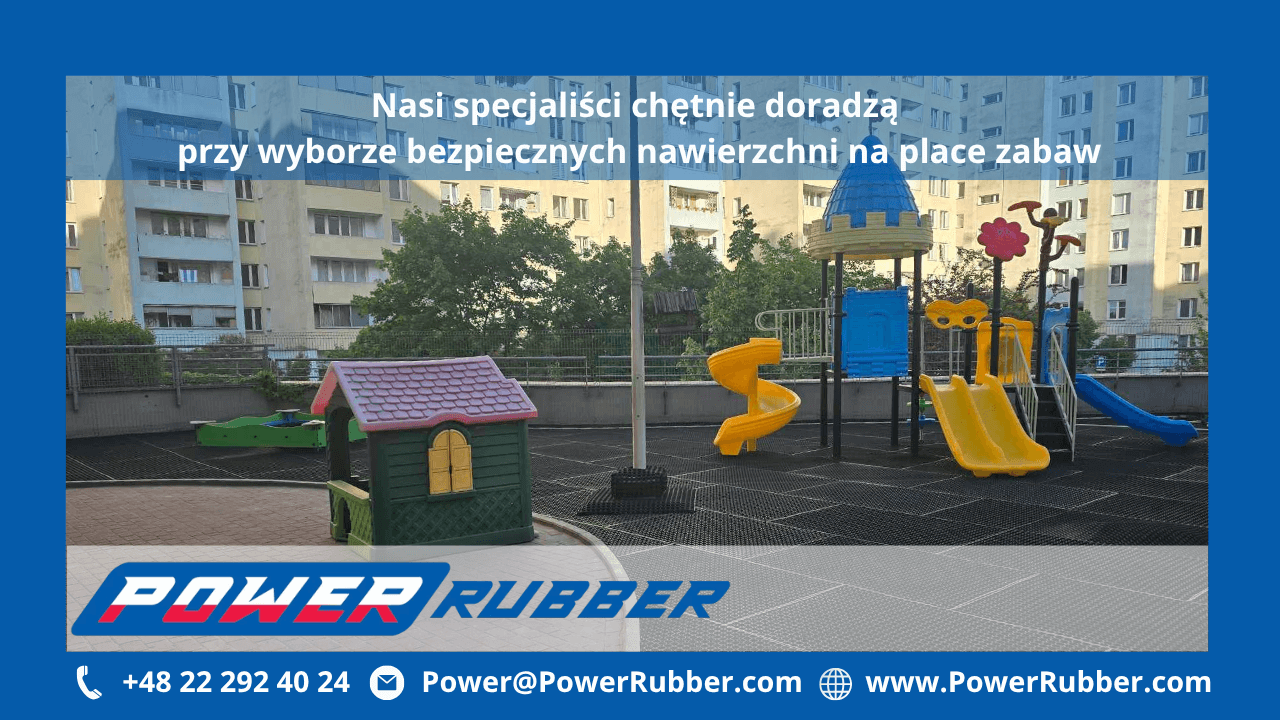
Already at the playground design stage, special attention should be paid to properly selected surfacing, which will significantly reduce the consequences of possible falls by children resulting in the head striking the ground from a considerable height. This will ensure the maximum level of safety and meet the necessary standards regarding playground surfacing.
It is assumed that an HIC value above 1000 indicates an increased risk of sustaining a critical head injury.
Benefits of using HIC-certified surfacing
Verified safety on the playground
A fall from a greater height creates a risk of serious injuries in children, including severe fractures, dislocations, loss of consciousness, and even death. HIC-certified surfaces are tested for shock absorption from specified heights. The HIC of a surface is simply the maximum fall height that will not cause dangerous consequences.
Compliance with safety standards
Playgrounds should be covered with special certified rubber tiles or mats. This facilitates technical acceptance and eliminates the risk of fines and costly corrections.
Adaptation to the type of equipment
A given HIC-certified surface can be precisely matched to the fall height resulting from the construction of a particular play device.
Which surfacing should you choose for a playground?
Each type of ground level has a different level of shock absorption. Undoubtedly, rubber surfaces offer a high level of shock absorption, which is why they are so often chosen for recreational facilities.
Our playground mats meet the necessary standards to protect children from health consequences resulting from impacts. They are installed around and under equipment. Certified safe playground surfaces are characterized by appropriate shock absorption, durability, anti-slip properties. They are free of sharp edges and other elements that could threaten children’s safety during play.
Playground mats allow water to drain freely, providing additional traction that minimizes the risk of slipping. Traditional surfaces (wood chips, sand, grass) provide limited protection and require frequent maintenance. Rubber is naturally resistant to degradation from UV radiation and high temperatures. Moreover, mats with certified shock absorption are resistant to heavy foot traffic and dampen annoying noises.
On which rubber products will we find the HIC coefficient?
If you are wondering on which products made of rubber mixes you will find HIC certification, it will be present on the following products:
- impact-absorbing mats and mesh mats 23 mm thick
- green impact-absorbing mats
- safety surfaces
- SBR tiles
- SBR rubber playground tiles with EPDM
- colorful playground mats
As you can see, certified rubber products help increase the safety of our children. They enable safe play and reduce the effects of injuries. We invite you to read our article: impact-absorbing mats installation and installation instructions, which will help you perform proper installation.
Isn’t it worth buying certified safe surfaces?
You can buy safe playground surfaces for children at the Power Rubber store
Rubber surfaces with HIC certification are an investment in safety and compliance with current standards and regulations.
We invite you to purchase Certified SBR and EPDM Tiles for playgrounds in many color variants! These tiles interlock to create a stable and anti-slip surface.
If you have any questions, please contact us by phone at: +48 22 292 40 24 or +48 50 51 603 03, or at the provided email address (power|powerrubber.com| rel="nofollow"|Power|PowerRubber.com) or via our contact form