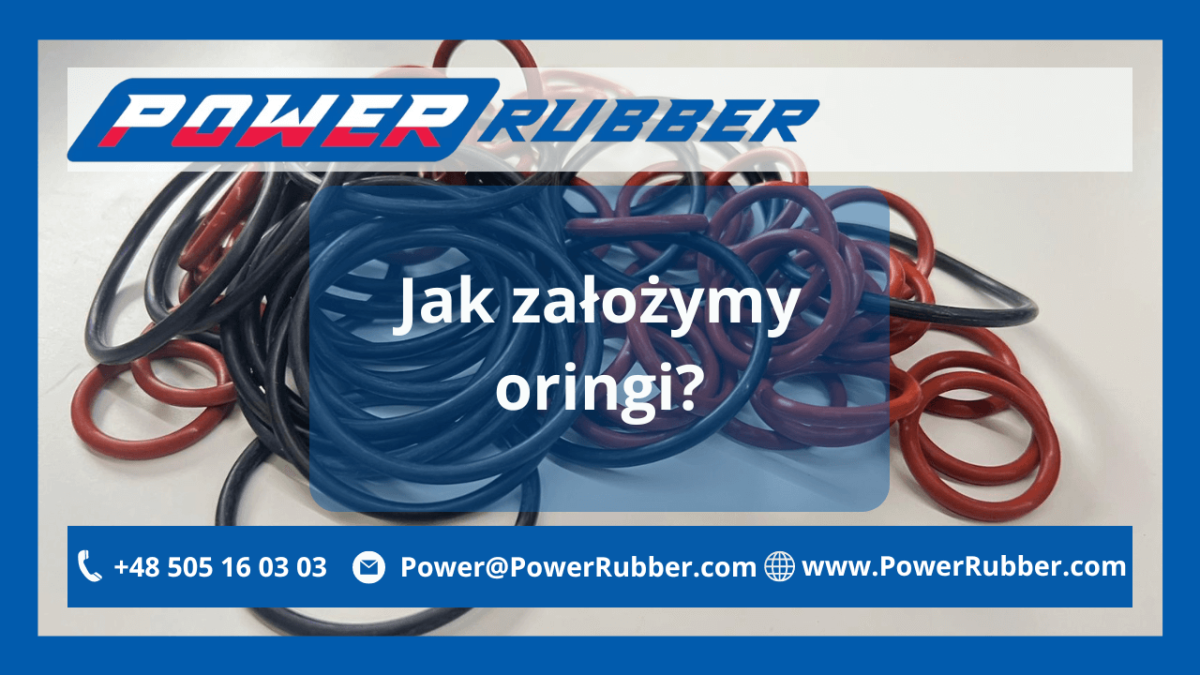
How to Install O-Rings Correctly? Step-by-Step Guide and Safety Tips
O-ring Installation
Dear User, if you are looking on various forums for answers on how to select, replace and what to watch for when installing O-rings, we invite you to read our article!
What is an O-ring?
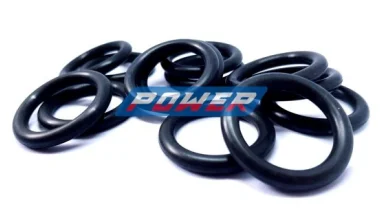
An O-ring is a type of technical seal with a circular cross-section. It is characterized by excellent elasticity, thanks to which we can perfectly adapt it to the joined elements. O-rings are used to ensure high tightness in static and dynamic applications. Their construction is designed to mount them in a groove and then compress them. They are used in many industry sectors such as transport, aviation, medicine, the food industry, hydraulics, and oil. They are also commonly used to seal mechanical elements, e.g.: in valves, clutches, engines, cooling systems, air conditioning, shafts, pipes. O-rings are made from various materials. Choosing the right type of rubber is crucial and should be adapted to the specific working environment.
Safety
Some time ago on our website we presented two basic methods of protecting rubber O-rings. Both silicone grease and technical petroleum jelly have indisputable advantages, which means that the choice of appropriate protection remains at the discretion of the customers. Why do we emphasize the importance of protecting these rubber seals so much? The answer is very simple and, interestingly, also directly concerns prevention. O-rings are used to improve the functioning of individual machine components. Often devices of this type have a very complicated construction, and the only method to extend the time of their proper operation is to care for their individual components. Rubber O-rings will in this case provide an excellent seal. However, they are ring-shaped, which can create some problems during their installation. So how to correctly place them in our machine so that they fulfill their role? We explain, clarify…
O-ring installation - Tips
It is worth remembering that the reliable operation of O-rings depends on correct installation. Proper installation creates a strong and durable seal that ensures appropriate tightness. Simply put: any mechanical damage to the sealing ring is one of the main causes of leakage. Do you want to replace an O-ring yourself (e.g. the injector seal in a car), and you think it's impossible? Check how to correctly replace an O-ring step by step:
Step 1
Determine and choose the correct size (check our clearly built catalog, which is a standard for technical seals). If you don't know, how to correctly size an O-ring, check our guide. This is necessary for the proper functioning of the application. An O-ring that is too small will tear during stretching and installation, while one that is too large will not provide proper sealing. Of course, an important issue is also choosing the appropriate material for the specific application.
Step 2
To install the O-ring without damage, clean all elements that the seal will come into contact with. Swarf from machining, filings and various types of contaminants can damage the O-ring or shorten its service life. Also cover any sharp and jagged edges that could cause the seal to tear. Threads, pins, grooves, sharp housings should be covered.
Step 3
O-rings are elastomers characterized by elasticity. During installation the O-ring should be stretched evenly. However, be careful about excessive stretching of the seal. A properly selected size does not require excessive stretching.
Step 4
Lubricate the O-ring and the assembly groove with an appropriate lubricant. The addition of a thin layer of a special lubricant (check the lubricant's compatibility with the O-ring) will increase the functionality and performance of the sealing ring, and also help seat the part more snugly in place. Also find out, what to lubricate O-rings with, so that the lubricant is suitable for the material used.
Step 5
All elements of the assembly groove should be adequately chamfered, which increases the safety of the seal. Proper preparation of the groove also matters when selecting the seal — check how to select an O-ring for the groove.
Step 6
For convenience, use the latest and reliable O-ring installation tooling called: picks.
Picks
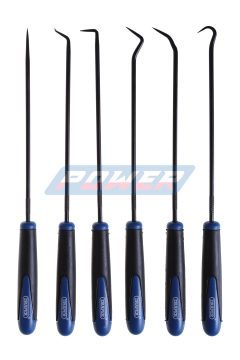
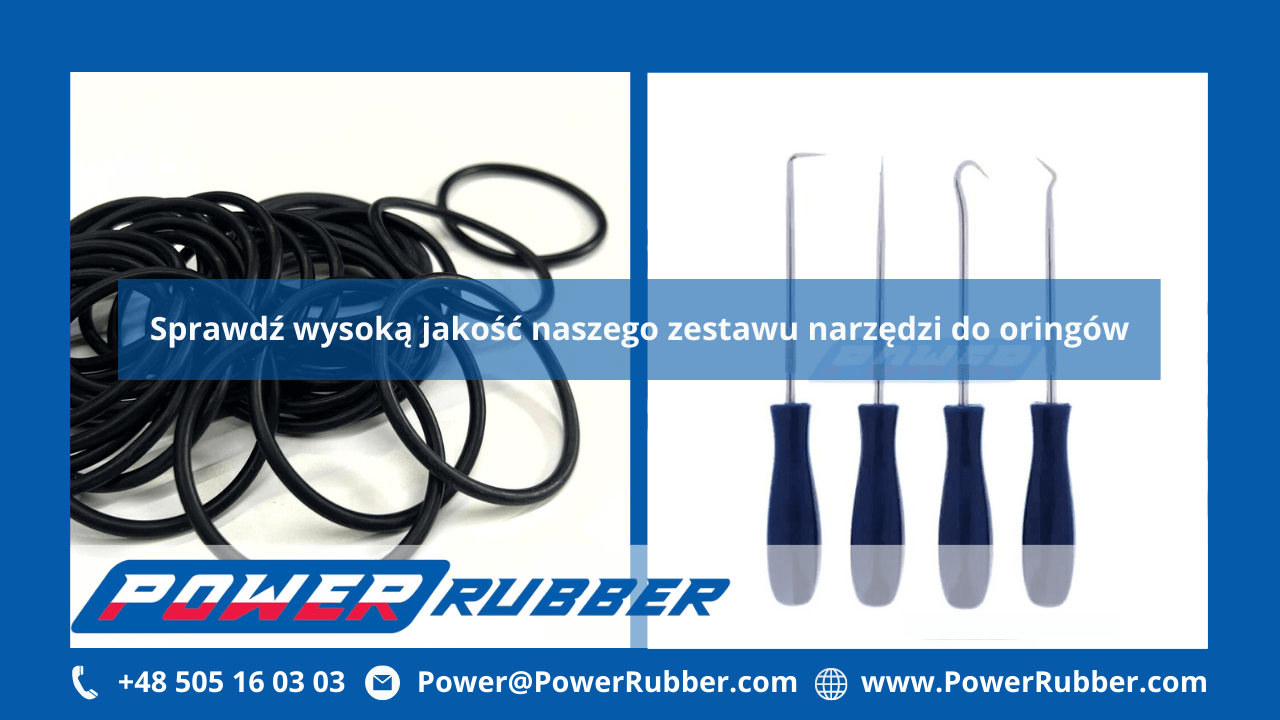
The ideal solution for correctly installing O-rings is a set of four picks, which are available in the POWER RUBBER offer in the tools section. We have prepared for you both a straight pick and a rectangular pick. Additionally the set is equipped with two hooks of different shapes and angles of inclination. Such a configuration of O-ring tooling allows not only their effective installation, but also replacement and correction of positioning. Depending on the location in which the seals are placed, as well as their accessibility from the outside, short or long picks will be needed. Both sets can be found in our offer. It is worth emphasizing that the presented picks are made of hardened and tempered steel. This increases their hardness and makes them resistant to cracking. O-rings are not the only type of rubber seals for which steel picks are used. Their use is also advisable in the case of simmerrings and rubber cords.
O-ring inspection after installation
Correctly fitting an O-ring alone does not finish the installation process. After seating the seal, its positioning and condition should be checked to ensure that it was not damaged during installation.
After installation, a check of the correct positioning of the O-ring in the sealing groove should be performed. The O-ring should be evenly seated around the entire circumference, without twisting of the O-ring (twist), excessive stretching, pinching or other damage caused during installation. Also check that the sealing surface and the assembly groove are free from dirt, filings and other contaminants. Pay particular attention to sharp edges – proper edge chamfering and their adequate protection reduce the risk of O-ring damage. If a lubricant is used during installation, ensure that its compatibility with the O-ring material is appropriate for the given application. In case of difficult installation or disassembly, it is worth using O-ring installation and removal tools, which limit the risk of mechanically damaging the seal. The final step should be a leak test after installation, confirming the proper functioning of the seal under actual working conditions.
How do we fit rubber O-rings made from different types of materials?
Types of O-rings
We constantly emphasize how important it is to protect rubber O-rings. We also inform how to install them to help you implement all our suggestions and advice. However, it seems that so far we have not presented the parameters of the O-rings we offer. Meanwhile, it is precisely their numerous advantages that are the reason for our enthusiastic encouragement of our customers to take an interest in the whole matter. We distinguish four basic types of O-rings:
NBR O-rings
Manufacturer Power Rubber offers sealing rings with a circular cross-section made of nitrile-butadiene rubber (NBR), which exhibits resistance primarily to vegetable and animal oils as well as mineral oils. Their operating temperature range is from -30°C to 90°C.
Oil-resistant FKM O-rings
FKM rubber O-rings can operate in a wide range and at higher temperatures (up to 210°C). This is related to their resistance to fuels, ozone and synthetic hydraulic fluids.
EPDM O-rings
If there is a need for seals to be exposed to atmospheric factors, we should look at the EPDM group. O-rings made of ethylene-propylene-diene rubber (EPDM) are resistant to ultraviolet radiation and steam.
Silicone VMQ O-rings
O-ring sealing rings made of silicone, thanks to their properties, are perfectly suited for food applications.
Most common mistakes made when replacing O-rings:
-
choosing the wrong size
-
choosing an unsuitable material (e.g. PTFE) for the working environment
-
excessive stretching of the sealing ring during installation
-
the assembly groove was not lubricated with an appropriate lubricant
-
damage to the O-ring by a sharp edge or contaminants
-
coiling or twisting the O-ring when it rests in the assembly groove
-
improper repair or removal of the previous seal
We warmly invite everyone to take a closer look at the POWER RUBBER offer, where many more wonderful products await than those we devote our weekly posts to.
We invite you to contact our specialists by phone at +48 22 292 40 24 or +48 505 16 03 03, by email (Power|PowerRubber.com| class="decorated-link" data-end="210" data-start="156" rel="noopener"|Power|PowerRubber.com) or via our contact form to select the appropriate silicone or EPDM products and ensure longer service life and a higher level of safety for your installations.