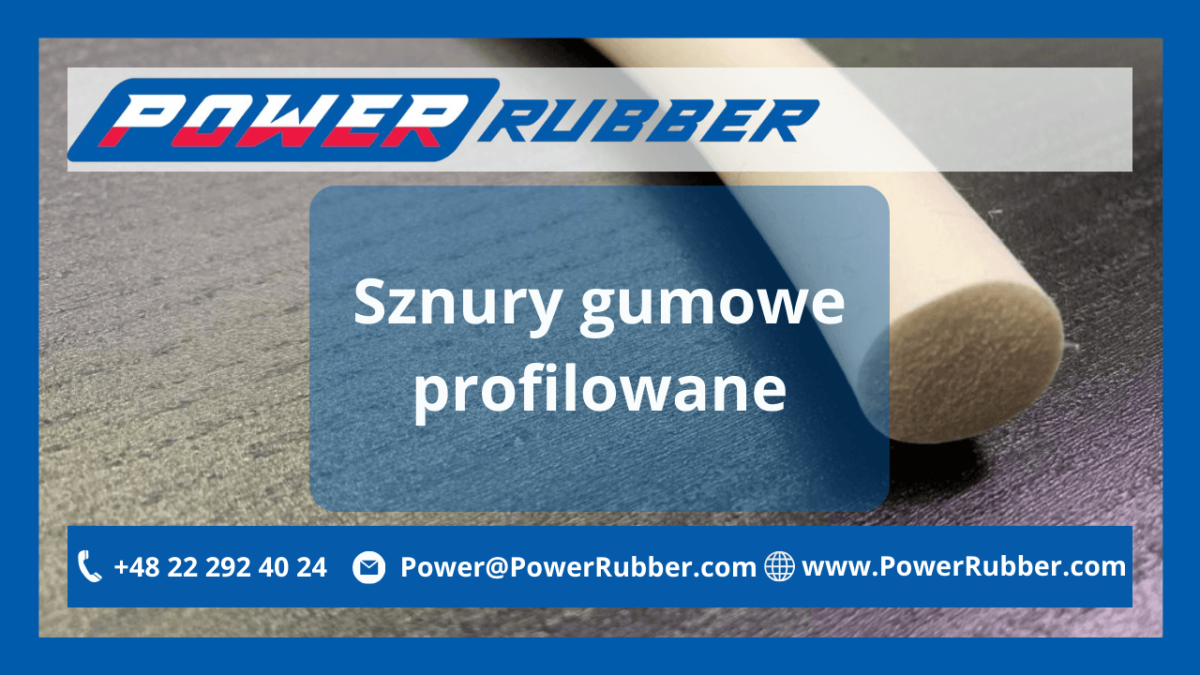
Profiled Rubber cords
PowerRubber has in its assortment a very large selection of profiled rubber cords. They will perform well in various conditions due to a wide spectrum of properties. They are most often made from rubbers and rubber compounds such as: NBR, FKM, silicone or neoprene. Among the products there are versions in solid (hard) form as well as soft spongy ones (using micro rubber). The high quality of the products and the precision of workmanship mean they are suitable for professional use in many industries.
Rubber seals - material characteristics
Rubber seals come in a wide range of thicknesses. They are very elastic and flexible, which makes it possible to adapt them to seal almost any surface. Interestingly, they are produced by a continuous vulcanization method. Thanks to this, the cord has uniform thickness along its entire length and always the same shape. Renowned manufacturers ensure that their rubber products are resistant to mechanical damage and have appropriate insulating parameters. This means they retain heat well and also prevent moisture formation. A sealing cord can be produced from many different rubber compounds. Below we present the characteristics of the most popular materials commonly used in production. It is worth familiarizing yourself with their specifics to be able to select the type of elastomer most appropriately for your individual needs.
Solid EPDM
This is an abbreviation of the full material name, namely ethylene-propylene-diene rubber. This solid rubber material has gained enormous popularity and recognition thanks to its high resistance to ozone and low susceptibility to chemical damage. It does not react with acids, detergents, alkalis, oils, engine greases, ketones or alcohols. This material is often used for seals in braking systems. It has high resistance to the action of water and hot steam. However, it is not a rubber material recommended for contact with oils and petroleum derivatives. The operating temperature range in this case is from -45 degrees Celsius to +120 degrees Celsius.
Sponge EPDM
A rubber material used in rubber cords with cross-sections from 2 to 100 mm. It has a slightly narrower operating range than the solid version, which is from -30 degrees Celsius to +120 degrees Celsius. It belongs to products with a good permanent set after compression, which makes it extremely durable. The spongy rubber is also resistant to hot water and steam, to ketones, alkalis, polar solvents and alcohols. This makes it often used in various industries and sectors. Particular caution should be exercised in the case of contact with petroleum products, organic and nonpolar solvents, because it may engage in intensive chemical reactions with them.
NBR
Also known as nitrile, that is, acrylonitrile-butadiene rubber. An attractive price makes it very popular while offering very good properties and parameters. With low expenditure this material has relatively good mechanical properties. It is not susceptible to permanent deformation and features low abrasion. Nitrile compounds are significantly more resistant than most other elastomers in terms of permanent deformation. They are also characterized by greater tear resistance. The operating temperature range is from -30 degrees Celsius to +120 degrees Celsius. In most cases this is entirely sufficient for industrial needs. This material also owes its popularity to high resistance to petroleum and petroleum-derived products. However, like every material, nitrile also has its limitations. It is not recommended for contact with ozone (unlike the material discussed above). It has moderate resistance to various weathering effects. Nevertheless, in most applications it will serve its role as an economical seal. It is a standard product for the hydraulic and pneumatic industries. Price and high quality are the main advantages of this material. 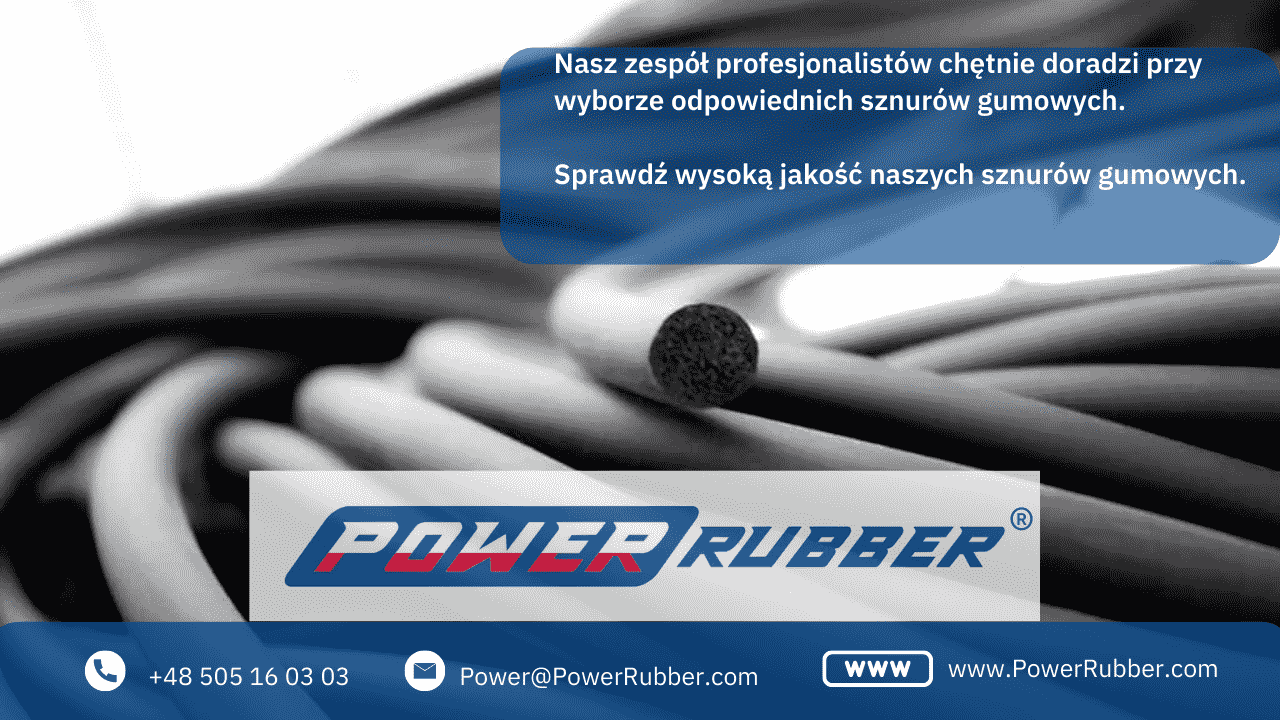
VMQ
Silicone rubber products (VMQ) — a very wide selection of sealing silicone products available on our online store is characterized by high quality and hardness from 40ShA to 80ShA. They are available in white, red and black. These are the most frequently chosen options due to their universality of application in various spaces. The products are manufactured meeting modern, demanding FDA (Food and Drug Administration, responsible for approving products suitable for contact with food) standards. Silicone rubber products are therefore also used in the pharmaceutical industry, where emphasis on sterility and at the same time durability is very important. Silicone excellently meets these conditions. The operating temperature range is from -60 degrees Celsius to +200 degrees Celsius. Among other elastomers, silicone used for the production of rubber seals has excellent flexibility and is also a good electrical insulator. It is resistant to the action of oxygen, ozone and sunlight and UV radiation. Thanks to these properties it is suitable for food applications at every stage of production and distribution. However, like every material it also has its drawbacks. Silicone is not recommended for dynamic systems. This material also has high gas permeability and is not chemically resistant.
FKM
FKM is another rubber material that is characterized by very good chemical resistance. It is distinguished by a wide operating temperature range from -20 degrees Celsius to +200 degrees Celsius. Various fluorine seals FKM have relatively low gas permeability. Therefore they are suitable for seals rather in high vacuum environments. Interestingly, it is also a non-flammable material. This material is resistant to mineral oils and greases, aromatic hydrocarbons. It is not susceptible to acids (including common hydrochloric, sulfuric, phosphoric, nitric acids). It does not react chemically with gasoline, diesel fuels, engine oils. However, it is not recommended for contact with hot water, steam, polar solvents, as well as low molecular weight esters.
Application of rubber seals in cord form
Rubber products have very wide applications in many machines and in various industrial installations. Due to their durability and flexibility, they are used, among others, in the construction industry - both land and marine. They are also often used on floating units. They can often be encountered in ports, on quays, at ramps, as well as on fenders. In such cases they serve as rubber bumpers, thereby protecting hulls from damage or scratches. Rubber seals with a round cross-section in the form of cords are found in hermetically sealed and heated tanks where various processes are carried out under increased pressure. They are also used in the automotive industry, machine industry, electronics and ventilation.
We guarantee professional technical advice. Please contact us at the telephone number +48 22 292 40 24 or +48 505 16 03 03, or by e-mail (Power|PowerRubber.com| style="background-color: rgb(255, 255, 255); color: rgb(0, 91, 171); border-bottom: 1px dotted rgb(0, 91, 171); text-align: justify;"|Power|PowerRubber.com) or via our contact form.