Oil resistant rubber sheets
Rubber sheets resistant to oils and petroleum-derived substances are used in places where the material is exposed to contact with oils, greases, fuels, gasoline or crude oil. In such conditions the appropriate selection of material is important for durability and safety of use. When choosing a sheet one should take into account the type of substance, operating temperature, loads and the method of application. In many applications the proper solution will be the use of rubber sheets resistant to petroleum-derived substances, that is NBR rubber sheets.
Rubber sheets resistant to oils and petroleum-derived substances
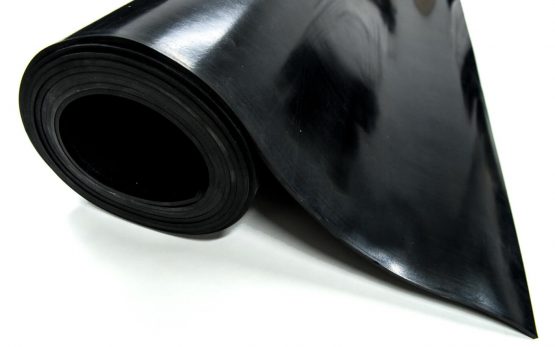
An NBR rubber sheet is made of butadiene–acrylonitrile rubber, which during the production process gives it resistance to all greasy, oil-derived substances. It will perform excellently wherever oils, greases and petroleum-derived products occur. In many workplaces various leaks may occur, and other rubber sheets used as pads will not cope with these degrading substances. NBR rubber is uniquely suitable for use in contact with greasy substances, while also being resistant to weather conditions.
Which rubber sheet to choose for oil, fuel and crude oil?
The type of rubber sheet should be selected according to the substance with which the material will come into contact. NBR is often used for mineral oils, greases, fuels and petroleum-derived substances. EPDM performs primarily in applications requiring resistance to water, weather conditions and ozone, and is not intended for continuous contact with mineral oils. For higher requirements regarding chemical resistance and temperature one can also consider FKM/FPM (Viton). The final selection should take into account not only the type of substance but also temperature, contact time and the material's load.
The chemical resistance of a rubber sheet depends primarily on the type of compound used and the substance with which the material comes into contact. In the case of mineral oils, fuels and other petroleum-derived substances, it is important to use a material with appropriate resistance to their effects. When selecting, temperature, contact time with the substance and mechanical loads should also be taken into account.
Where are rubber sheets resistant to oil used?
Due to its properties, an oil-resistant rubber sheet is suitable wherever things are greasy. This includes industries such as hydraulics, because hydraulic fluids do not damage it (components in the form of specialized seals are widely used in hydraulics and pneumatics) and the automotive industry, which uses the most petroleum-derived substances. Oil-resistant rubber is used, among other things, to make technical hoses for fuel and oils. These sheets can operate in locations where the temperature reaches even -100 °C. This type of rubber has been used as a component in medical gloves. It is worth mentioning that NBR rubber sheets also perform excellently in places with varying weather conditions and where large forces act (they are resistant to stretching, impacts and damage). NBR rubber sheets can be used as: vibration-damping pads, workbench tops, insulations, seals and bumpers.
Resistance of rubber sheets to oils and petroleum-derived substances
Depending on the material used, rubber sheets may exhibit different resistance to substances present in the working environment. In the case of NBR sheets, resistance to the following is particularly important:
- petroleum-derived substances (lubricants, fuels),
- fats, both vegetable and animal,
- crude oil,
- oils and gasoline,
- exposure to sunlight.
- hydraulic fluids
- high pressure and a very wide temperature range (from -100 °C to +80 °C)
As you can see, NBR rubber sheets have very good properties and will handle situations where other rubbers cannot.
How to choose an oil-resistant rubber sheet?
When selecting an oil-resistant rubber sheet you should consider not only the type of material but also its operating conditions. The most important factors are the type of oil or petroleum-derived substance, temperature, hardness, sheet thickness and the mechanical loads present. For custom-made parts, the required dimensions and the method of subsequent application are also important.
Where to buy an oil-resistant rubber sheet?
Rubber sheets resistant to oils and petroleum-derived substances are available in various thicknesses, hardnesses and dimensions. When purchasing, it is worth specifying the type of substance, operating temperature, required dimensions and the loads to which the material will be exposed. For atypical applications, it is advisable to consult the manufacturer about the selection of the appropriate rubber compound.
Because we care about meeting all our customers' expectations, we offer rubber sheets with a wide range of parameters. The hardness achieved by the rubber sheet is about 65 degrees Shore A, which is the most popular.
As for sheet dimensions, they come in 3 variants: 1200 mm x 10000 mm (up to 10 mm thickness), then 1200 mm x 5000 mm (up to 20 mm thickness) and a non-standard one, related to achieving a maximum thickness of 50 mm - 1000 mm x 1000 mm. Our rubber sheets are available in many thickness variants, starting from 1 mm, through 15 mm, up to 50 mm (only in the 1000 x 1000 mm roll).
NBR rubber sheets are usually black in color, but on special customer request we are able to match other colors and cut mats to size. Everything is done using the latest technologies, meeting all standards and taking care to maintain necessary safety standards.
We guarantee professional technical advice. We invite you to contact us by phone at +48 22 292 40 24 or +48 505 16 03 03, or by e-mail (Power|PowerRubber.com| style="background-color: rgb(255, 255, 255); color: rgb(0, 91, 171); border-bottom: 1px dotted rgb(0, 91, 171); text-align: justify;"|Power|PowerRubber.com) or via our contact form.