Rubber O-rings - Guide on O-rings and other Technical Seals
Our current article aims to explain the concept of rubber O-rings. By reading this entry you will also learn about other technical seals operating on our Polish market.
O-ring - what is it?
Answering the question above, it is worth quoting the available definition of O-rings:
Theoretical part: O-rings
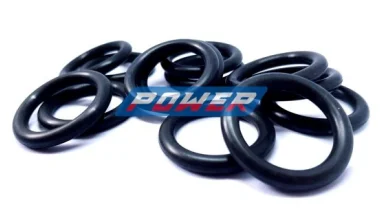
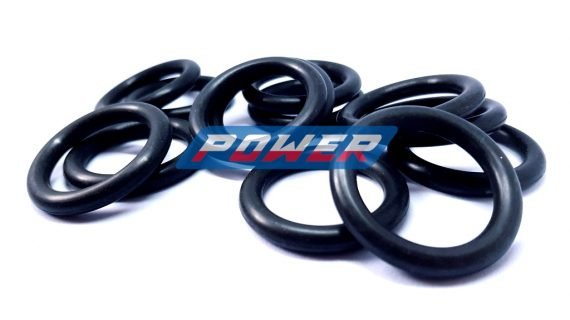
An O-ring, also known as a seal ring with a circular cross-section. A type of gasket in the shape of a ring. Practical part: O-rings So let us return to more useful information about O-rings than their definition. As is well known, the O-ring is the most popular technical seal.
Why are they titled the most popular technical seals?
To answer this, we will divide it into the following components:
Ease of use – Easy installation of O-rings
If we have already come into contact with rubber O-rings, we know that their installation is one of the simplest tasks. This is primarily due to their flexibility, which is highly valued today. Wide range of O-ring sizes The wide availability of sizes, from any inner diameter to the cross-section (commonly called O-ring thickness) allows quick finding of the correct size that meets our needs. It is also worth mentioning the wide range of available rubber compounds, which allow increasing the longevity of these basic technical seals; however we will write about this in one of the following sections.
O-rings and price
Because we are Polish, price matters to us. Also in the case of O-ring pricing – price favorably affects their demand. The cheapest seals can be purchased from PLN 0.39 (in words: thirty-nine groszy) per piece in retail. Wholesale prices at POWER Rubber are even lower! It is worth sending inquiries to the email: power@powerrubber.com
Basic information for the term: O-ring
In this section we will take time to convey, or rather remind, the basic information and features related to rubber O-rings. O-rings and their markings On the market there are several ways of marking O-rings. One of the simplest for the user is the marking used by us (POWER Rubber – Editor’s note). What is this marking for O-rings? O-rings in POWER are marked as follows: Inner diameter x Thickness (or, as we mentioned earlier, cross-section, or height). Would you like to see an example of an O-ring marking in POWER Rubber? Of course! Here we give a simple example of an O-ring with an inner diameter of 5 and a height of 2. For us such an O-ring has the following marking: 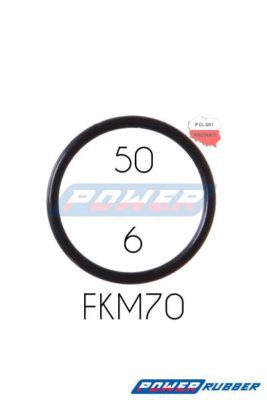
Here you can buy Rubber O-rings - manufacturer
O-ring dimensioning
Following the markings, addressing the topic of O-ring dimensioning, the best source of knowledge on this subject is our dedicated technical article:
How to size O-rings We invite you to read
What other basic information about O-rings should be known? What will be useful to most Users? What we should pay attention to are the compounds from which O-rings are available.
Types of Rubber O-rings – O-ring Materials and Compounds
Here we have two options to choose from:
- We invite you to our article in which you can check the broadly described available rubber compounds for basic technical seals – not only O-rings are worth mentioning at this stage. Link to the technical article:
Rubber O-rings – Everything you should know
- The second option is to get acquainted with the following short characteristics for each of the basic rubber compounds.
NBR O-rings – O-ring Perbunan®
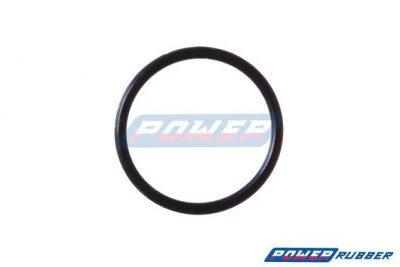 An NBR O-ring is a technical seal made of synthetic rubber, officially acrylonitrile-butadiene rubber, intended for contact with hydraulic oils. Temperature range: -20°C to +90°C Example of use: commonly occurring in the locations of the cheapest O-rings, e.g. seals for oil containers. Note! POWER Rubber does not recommend using NBR O-rings inside engines. For such applications it is worth choosing O-rings made of Viton® compound – details are provided in the next part of the article.
FKM O-rings – O-ring Viton®
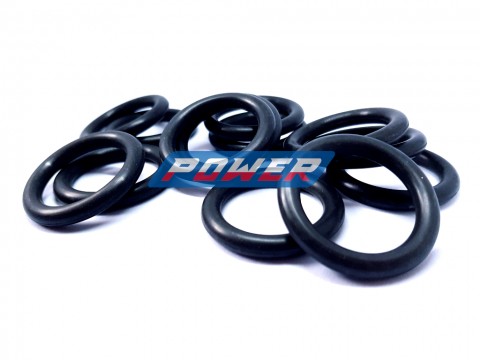 An example of a fluorine compound, which is a higher-grade compound than NBR. It has greater chemical resistance and a higher temperature range than NBR. Recommended for contact with mineral oils. Temperature range: -14°C to +250°C Example of use: seals inside engines.
HNBR O-rings – O-ring Therban®
O-rings made of hydrogenated acrylonitrile-butadiene rubber, abbreviated HNBR. The material is intended to work with oils and greases, and ozone. It is worth noting that the material has higher resistance, especially to abrasion, than NBR. Temperature range: -21°C to +150°C Example of use: O-rings in contact with oil, requiring frequent disassembly.
EPDM O-rings – O-ring Dutral®
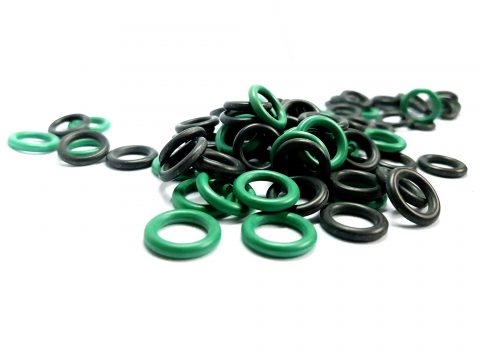 EPDM O-rings are seals produced from ethylene-propylene-diene rubber compound. Seals made of this material are intended to work in weather-related conditions, in contact with water, exposed to sunlight. Temperature range: -41°C to +125°C Temperature range for oxygen-enhanced compound: -50°C to +150°C Example of use: seals in steam boilers and compressors, or in contact with ozone.
Neoprene O-rings – O-ring CR
Neoprene O-rings are one of the newest technologies used on the market. They combine the characteristics of EPDM and NBR compounds. What does that mean? It means they can be exposed to UV radiation while maintaining resistance to contact with oils. Temperature range: -40°C to +100°C Resistant to contact with freon and ammonia.
Silicone O-rings – O-ring Elastosil®
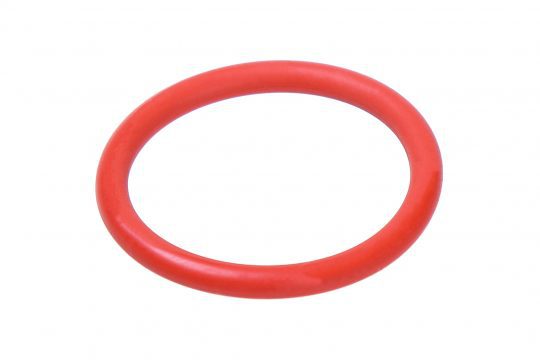 O-rings made of silicone compound have two designations: VMQ O-rings with operating environment: -55°C to +225°C and FVMQ fluoro-silicone O-rings, whose operating range is from -20°C up to +300°C Silicone O-rings may have FDA certification, i.e. certification enabling the use of O-rings in the food industry. Example of use: seals on a food line with liquid application, silicone rubber seal for contact with drinking water. The Silicone O-ring is most often a seal certified by the FDA (Food and Drug Administration) - a certificate for contact of rubber products with food (in accordance with EU directives https://ec.europa.eu/food/)
FFKM O-rings – O-ring Kalrez®
O-rings made from FFKM or FFPM compounds. Officially perfluoroelastomer known under the name Kalrez® FFKM rings are characterized by very high chemical resistance and a wide temperature range. Depending on the model the temperature range is from -42°C to +325°C Basic models have designations: 0040, 0090, 1050LF, 3018, 4079, 6221, 6375, 6380, 7075, 7090, 9100. You can read everything here: Kalrez
PTFE O-rings - Poly (tetrafluoroethylene) Teflon®
PTFE O-rings are seals from a rubber-like compound closest to plastic due to being made of Teflon®. This allows producing O-rings resistant to heat, cold, corrosive chemicals and to be used where a low friction coefficient is required. Certified for contact with food. Temperature range: -200°C to +260°C Resistant to compression and abrasion.
Coated O-rings – O-ring FEP PFA
These are O-rings coated with a Teflon layer intended to increase chemical resistance. Temperature range: for FEP O-rings it is from -200°C to +204°C, and for PFA O-rings it is from -200°C to +250°C Example of use:
- connections in pipeline systems on drilling platforms
- seals with a low friction coefficient (low rolling resistance)
- chemical-resistant seals
- O-rings for rotary motion
Durability of rubber compounds
| Product | Material | Durability |
|---|---|---|
| Rubber product | Nitrile rubber (NBR) | 10 years |
| Silicone rubber (VMQ) | 20 years | |
| Fluorine rubber (FKM/FPM/Viton®) | 20 years | |
| Acrylic rubber (ACM) | 20 years | |
| Ethylene-propylene-diene rubber (EPDM) | 20 years | |
| Hydrogenated nitrile butadiene rubber (HNBR) | 10 years | |
| Styrene-butadiene rubber (SBR) | 10 years | |
| Polyester urethane rubber (AU) | 10 years |
Selecting the O-ring material for working conditions
When choosing an O-ring, one should not be guided solely by its dimensions and hardness. The type of working medium with which the seal will have direct contact and the chemical compatibility of the selected elastomer are also important. The O-ring material should be chosen taking into account the properties of the medium, the operating temperature and pressure, because improper matching can accelerate seal degradation. In demanding applications it is also worth considering the risk of phenomena such as explosive decompression and compression set, i.e. permanent deformation after compression, which can affect the O-ring's ability to maintain tightness.
Spring-energized O-rings
Spring-energized O-rings are sealing rings that are built from a metal spring element and a smoothly closed housing made of PTFE / Teflon®. They provide reliable operation in demanding environments, which is why they perform excellently in the toughest industrial conditions. PTFE spring-energized O-rings can be used in rotary, oscillating, reciprocating and static conditions.
Properties of spring-energized O-rings
High-quality spring-energized O-rings are an innovative solution that provides long-lasting sealing in applications where a standard seal would be torn within minutes.
The PTFE / Teflon® coating provides excellent chemical and temperature resistance. The spring provides a constant radial force acting on the mating surfaces, which guarantees the highest sealing efficiency in a wide range of demanding environments and conditions, such as: high pressure and temperature fluctuations.
Let's take a closer look at the unique properties of spring-energized O-rings, here they are:
-
exceptional chemical compatibility - PTFE / Teflon® material exhibits resistance to a wide range of chemical substances, including acids, bases, solvents and corrosive liquids;
-
temperature resistance - the PTFE / Teflon® housing withstands extreme temperatures, making it suitable for both cryogenic and high-temperature applications;
-
low friction coefficient and long service life - spring-energized O-rings with a Teflon coating provide less wear between sealing surfaces; the spring minimizes the contact surface, reducing friction and increasing the durability of the seal, also in low-temperature or cryogenic applications;
-
resistance to high pressure differentials - the core of a steel spring provides effective sealing in conditions where high pressure differentials occur;
What benefits do spring-energized O-rings provide?
Spring-energized O-rings are undoubtedly an excellent solution that performs well in applications with aggressive substances. They provide tight sealing and integrity across a wide range of temperatures, as well as during long-term exposure to corrosive chemicals. They exhibit minimal thermal expansion and contraction. They are designed to work at very high and low pressures, and even in vacuum.
What are the basic benefits of using spring-energized sealing rings?
-
prevents unexpected failures - O-rings retain their strength at high temperatures, while at lower temperatures they still maintain their flexibility;
-
extrusion resistance - excellent performance at low and high pressures;
-
retain their original shape - when exposed to aggressive chemicals, they keep their shape;
-
suitable for high-temperature applications - they maintain high sealing performance in demanding thermal cycles;
-
suitable for cryogenic applications - the steel spring core provides the resilience necessary for low-temperature applications;
-
prevent unwanted leaks - the spring provides additional sealing energy that effectively prevents medium leakage at low pressure;
-
versatile application - they ensure tightness in the most demanding environmental conditions;
Applications of spring-energized O-rings
Spring-energized sealing rings offer many advantages, thanks to which they are widely used in various industries, including the oil and gas industry (valves, pumps, actuators), aerospace (turbines, hydraulic and fuel systems), pharmaceutical, food processing (pumps, valves, mixers), automotive (engine parts, transmissions, fuel and braking systems). They are also used in:
-
medical equipment (vacuum chambers)
-
precision robotics
-
dispensing equipment for epoxy resins or adhesives
-
compressors
-
hydraulic cylinders
-
mechanical seals
-
cryogenic coolers
-
food processing equipment
-
chemical pumps
Spring-energized O-rings available in the Power Rubber store
We are specialists in sealing technology. At Power Rubber we supply spring-energized O-rings of the highest quality, which perform excellently in extreme industrial conditions. As you can see, we have presented the basic rubber compounds from which technical seals are made. Now let us ask: Is there anything else I should know about seals? We answer: Yes, it is still worth addressing one key topic, or rather:
Hardness of rubber O-rings
The hardness of O-rings is one of the most overlooked aspects related to these seals. Many specialists forget about the consequences of wrong hardness selection of O-rings.
How is O-ring hardness marked?
O-rings, specifically their hardness, are marked on the Shore A scale. Example? O-ring 5x2 70 Shore A means: an O-ring that reads 70 on the Shore A scale (abbr.: ShA).
What does 70 ShA mean, is that a lot?
The standard among O-rings is indeed the value 70 ShA. It is a universal value. Below this value O-rings or other seals are softer: eg. 50 ShA, and above 70 ShA, e.g.: O-ring 80ShA or O-rings 90ShA are harder variants.
What does O-ring hardness affect?
And the whole point: hardness affects resistance to occurring pressure. What does this mean? It means that as the pressure in the device where the seal is to be installed increases, the seal should have higher hardness. Is that all topics? Due to our extensive knowledge, we will gladly share information about colored O-rings.
Colored O-rings
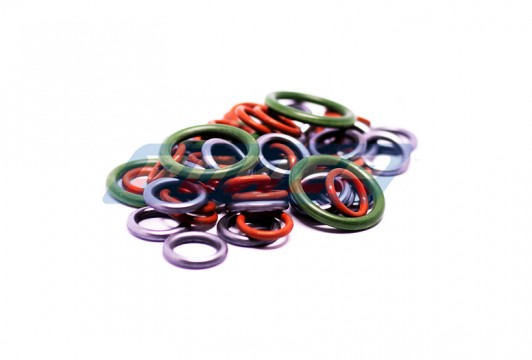 Each of us gets used to colors, whether the color of clothes or accessories in daily life. We know that for occasions where we want to look elegant we put on a white shirt, and for casual outings we may allow ourselves some deviation. Despite strict rules, in life there are soft rules, especially regarding colors. Best example: Red is always faster Why has this become common? – you may ask. And it is because most sports cars in earlier years were exactly that color, a color that simultaneously made the brand of the vehicle recognizable. Can a fast car nowadays be in a color other than red? After a moment’s reflection, each of us answers: yes, a fast car can be in another color. Current technological developments allow various customizations, including the option to choose any color from the RAL palette (international color standard). Everything depends on costs. The same situation applies to O-rings and other seals. In fact, we are able to offer any color of O-rings for any intended purpose, however it is worth considering whether we can use standard colors such as black or green for O-rings, which are common colors for each of the compounds. Additional advantages include ultimately lower price due to using a color that is standard.
Why use colored O-rings?
What is the purpose of using colored O-rings? Here we can give several examples from our experience in technical sealing consultancy.
- Clarity in parts selection Marking various parts with colors reduces the possibility of mistakes in the picking or inspection process
- Aesthetic value When the seal ring is mounted in a visible place, it is worth taking care of aesthetics and choosing an appropriate color – a color matching our taste or the target Customer.
- Distinguishing rubber compounds Choosing specific colors such as green O-rings or red O-rings typically allows identification of the compound they are made of. And so, as we emphasize, we know that seals in a brick-red shade are in most cases rings made of Silicone, i.e. VMQ compound.
What do O-ring colors mean? Check the adopted standards
Here in Poland, we have adopted that each color corresponds to a different material. As explained above, we can use seals of any color and properties, however the Old Hands remember the following uses for each color of O-rings. Thus we can assign:
Black O-rings
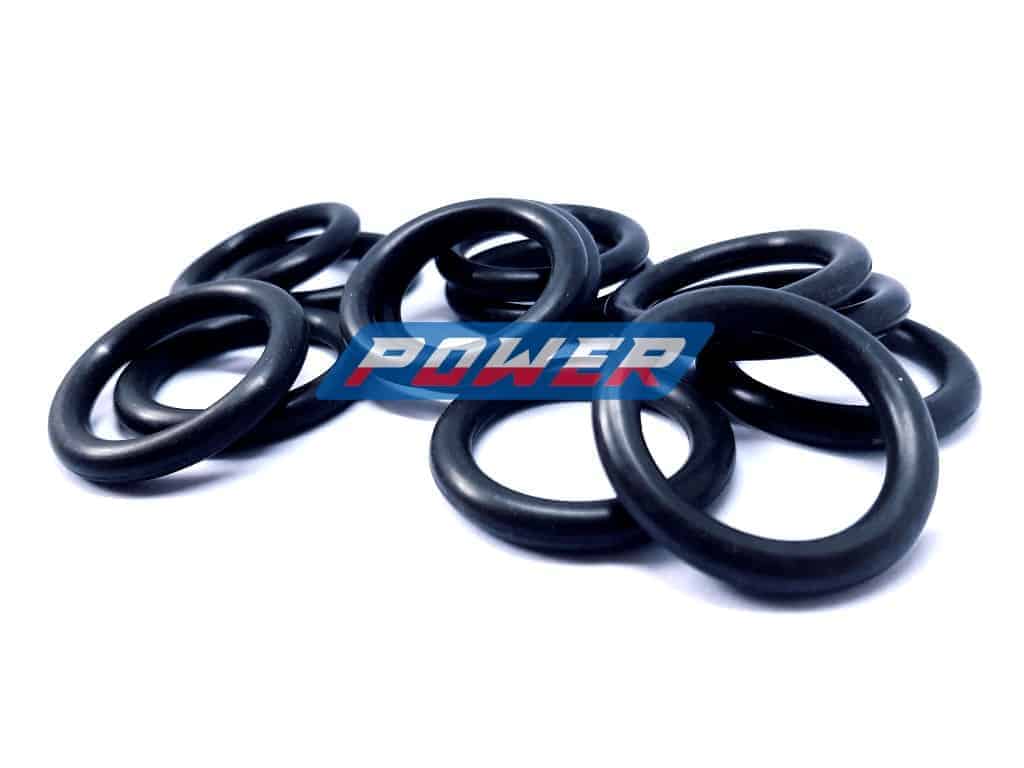
Black O-rings – under this name any of the available compounds may be hidden. Most often these are NBR rings, or Viton® seals, but also EPDM O-rings.
Where can we encounter black O-rings?
In most common places where seal rings are used. At the sink for the faucet, in a bicycle, or in basic functions where rubber seals serve sealing roles.
Brown O-rings
The brown color for O-rings is used for rings made of Viton®, FPM and FKM compounds.
Red O-rings
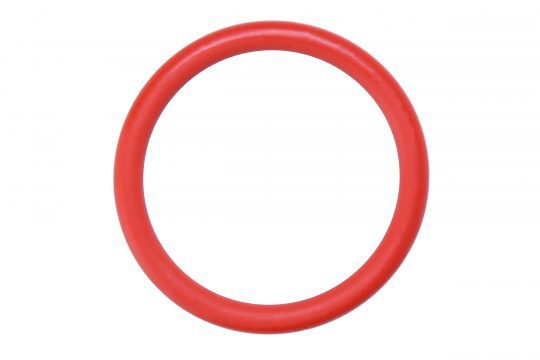
Red O-rings are commonly accepted as silicone O-rings made of VMQ compound.
Green O-rings
Green O-rings are associated with EPDM and HNBR compounds. O-rings used for air conditioning applications.
White O-rings
White O-rings are silicone rings. They commonly occur in two versions: transparent and milky white. This color is also assigned to Teflon products, often abbreviated PTFE.
Blue O-rings
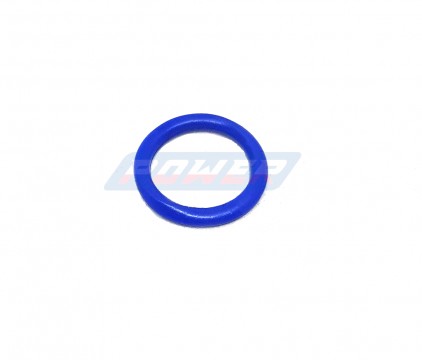 Blue O-rings are a rarer sight. However such unusual seals are also available in our offer.
Yellow O-rings
Another yet rarely encountered color for technical seals is yellow. However, here too we offer a professional approach as a manufacturer of rubber products. Advice for those seeking yellow O-rings: please contact us to agree dimensions and application.
Silver O-rings
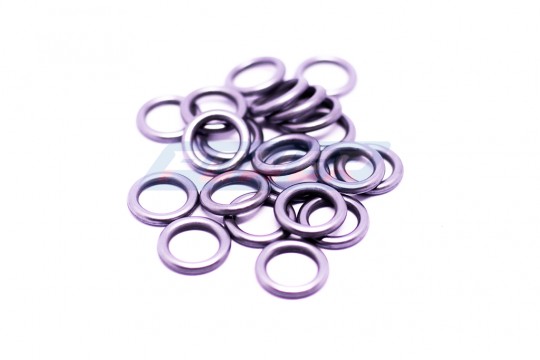 Even less commonly encountered seals are those in silver color, but the most important is to satisfy the Customer.
Silver-colored seals - Customer-specific orders
At one time, we had the opportunity to supply seals in silver color. It must be admitted that this is a very unusual color for rubber products. More associated with metal alloys, therefore the use of this color was required: to reduce the visibility of the O-rings on the outer layer of the device. We are pleased that another manufacturing company joined the group of satisfied POWER Rubber Customers. However, there will always be someone who asks:
What differentiates a green O-ring from a black one?
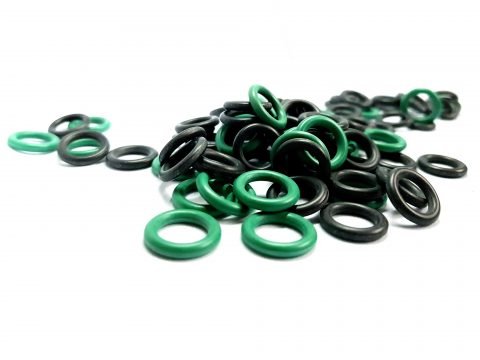 When we want to explain the differences between a green O-ring and a black one, we can help others by:
- Recommending this article where everything is described.
- Providing the email address to the Specialists at POWER Rubber power|powerrubber.com| |power|powerrubber.com
- Providing the phone number to the Specialists at POWER Rubber: +48 505 16 03 03
As you can see, O-ring colors are arbitrary according to the Customer's needs. The O-ring and rubber product manufacturer can advise on the use of appropriate compounds. Available rubbers include: NBR, FKM, FPM, EPDM, HNBR, Silicone or FFKM and also seamless coated O-rings, most commonly known as FEP O-rings.
Check here: standards and norms adopted for O-rings
O-rings - Applications
Due to our experience and contact with Customers, we will present the most commonly used places for seals. Our extensive experience helps us not only in selling seals as a rubber O-ring store, but also as professionals who select technical seals for existing machines and devices. We match rubber seals to existing grooves, but also design grooves thanks to our knowledge of how to select an O-ring for a groove. Let us check then where our round-section rubber seals are most often found.
Rubber O-rings - keyboard
 The computer keyboard - an accessory in almost every home, apartment or office. Both as an external keyboard and the keyboard in our laptop. Of course we are not talking about touch models, but those with keys.
Where are rubber O-rings in a keyboard?
It turns out the rubber rings are located just under the keys. It is worth noting that keys should be removed carefully for the installation of O-rings.
Installing O-rings for a keyboard
Here it is worth using a special keypuller tool. It is easy to damage them. For this purpose:
- Pry up the key - one single key at a time
- Remove the key
- Install the O-rings purchased in the POWER Rubber O-ring shop by placing the O-rings on the underside of the keys.
- Check whether the ring installation was done correctly
- Put the key back in its place in the keyboard
- Repeat the procedure for each of the keys
And that is what a proper instruction for installing O-rings for a computer keyboard looks like.
Benefits of O-rings for a computer keyboard
What function do O-rings perform in a keyboard? We answer this simple question with a short story: Imagine that after a hard day at work at the computer you come home. Home where it is silent and peaceful. Imagine that right after dropping your things by the door you take off your shoes and rush to the armchair to relax. You sit down and begin to relax, until suddenly: in all the silence you hear the gentle clicking of the keyboard. Initially a quiet sound, it becomes an annoying noise, and so the moment of relaxation has passed.
What was missing in that situation?
O-rings for the keyboard were missing. As seen in the story above, O-rings in a keyboard quiet the key noise. They increase work comfort by reducing the noise occurring when typing and using a laptop or desktop computer. Therefore, it is worth investing to ensure inner peace.
Rubber O-rings used in cars, watercraft and aircraft
It turns out the applications for these seals are everywhere. This allows them to be found in the most diverse locations. Thus we can encounter them in passenger cars, water vehicles or even aircraft.
Let us ask: why is that?
It results from:
- the wide range of available sizes: large, small, thin and thick
- available colors - white, black, green, red, blue or transparent
- available rubber compounds, the correct selection of which can help sealing, especially in special tasks
Following this, our rubber seals can be found in many places in these vehicles and aircraft:
- engine
- injector O-rings
- turbo hose O-rings
- thermostat O-rings
- drive component
- in the steering wheel
- in the ignition device
- in the mirror
- in drive motors of seats, electric mirrors and seat adjustments
- in speaker housings
Our list keeps growing! We invite you to submit ideas in the comments!
Faucet seals
Who among us does not remember the situation when our faucet - whether kitchen or bathroom - started leaking? Drop by drop, until full failure and a continuous stream of water.
Seals for faucets
What causes a faucet to leak? What causes seals in a washbasin faucet to leak? Most often the cause is a damaged faucet seal.
How to fix a leaking faucet?
To stop the leak from a faucet, it is enough to follow the following action plan:
- Remember which side is hot water.
- Write it down on a piece of paper or in your phone.
- Turn off the hot water valve to that faucet. Mark it.
- Turn off the cold water valve to that faucet.
- Unscrew the hot water hose.
- Unscrew the cold water hose.
- Remove the cap that indicates which way to turn the tap to get cold, warm, lukewarm or hot water. It covers a small screw. Sometimes it is worth using a screwdriver or prying with a knife.
- Get a set of Allen keys.
- Unscrew the visible screw.
- Remove the top element of the tap with a strong pull.
- Unscrew the tap from below using - most often - a flat wrench 10 or 8.
- Disassemble the faucet - depending on the model there are two screws or one large screw.
- Remove the damaged seals from the valves.
- Install O-ring type rubber seals from POWER Rubber.
- Screw in one large screw, or two smaller ones.
- Screw the faucet to the countertop or sink if we are talking about a bathroom faucet.
- Fit the top handle that allows changing the temperature - i.e. deciding on the share of each water stream.
- Tighten the small screw using the Allen key - Allen key.
- Stick on an informational label - it would have been useful earlier to note which way is hot water to properly position the cap.
- Screw in the cold water supply hose.
- Screw in the hot water supply hose.
- Turn on the cold water valve.
- Check the faucet tightness.
- Turn on the hot water valve.
- Check the tightness of the bathroom or washbasin faucet again.
- Praise yourself for completing the repair correctly.
What if the leaking kitchen faucet still leaks?
If after our replacement the faucet sadly still leaks, you have two options:
- Incorrectly installed faucet seals - which is unlikely
- Damaged valve in the faucet - as we know, manufacturers use increasingly cheaper solutions to increase sales. In this way they also limit the use of high-quality components - we can speak here of broadly known processes called: aging process.
For the second case we have two solutions:
- Purchase a new valve for the faucet. Then you should go through our instruction again.
- Purchase a new faucet. If we talk about higher-end faucets, then choosing the first solution will bring much greater savings. This results from more expensive materials used in the construction of the faucet by the manufacturer.
Types of O-ring installations
Types of sealing
The application of O-ring type sealing rings is classified according to the type of motion occurring between two surfaces:
Static sealing – static application covers sealing between two parts that do not move. The working surfaces do not undergo continuous motion. They act as a permanent seal between two immovable parts, providing a tight barrier to prevent leakage of liquids and gases.
Dynamic sealing – dynamic sealing occurs when parts move relative to each other with reciprocating, rotating or oscillating motion. There is continuous movement between the mating surfaces.
O-rings – types of installation
Rod seal – the groove is located on the external part of the rod. It provides sealing between the rod and the cylinder or housing. It prevents fluid leakage and ensures smooth and controlled movement of the rod during device operation. It is made of wear-resistant materials suitable for specific operating conditions.
Piston seal – the groove is located inside the piston part. It seals the space between the piston and the cylinder wall in internal combustion engines or devices that use pistons. Commonly used in hydraulic cylinders. It prevents oil and gas leakage. Usually made of materials resistant to heat and pressure.
Flange seal – the groove is placed in the flange and covered with a lid. Sealing elements are installed between the contacting flange surfaces to create a tight seal.
Mounting grooves for O-rings
Static sealing
Sealed machine parts do not move relative to each other. In the case of fixed connections, detailed rules for selection and application are discussed in the guide static seals – rubber O-rings.
Radial installation
Static radial seals operate in environments where no movement occurs between the mating surfaces being sealed. The cross-section of the O-ring is compressed in the radial direction. Radial seals are compressed between the inner and outer surface of the sealing ring.
Axial installation (flange seal)
In axial static sealing compression occurs both on the top and bottom of the ring cross-section. This type of seal is typically used in face (flange) applications and is easier to produce than static radial seals. If the pressure acts from the inside, the O-ring should contact the outer diameter of the groove and be slightly compressed by about 1% to a maximum of 3%. If pressure acts from the outside, the O-ring should contact the inner diameter of the groove and be slightly stretched (up to a maximum of 6%).
Trapezoidal groove
In the case of a trapezoidal cross-section groove, the groove center is used to determine the appropriate O-ring diameter, which ensures easy assembly. Due to the special geometry, production of this groove is very complicated, however it prevents the O-ring from falling out after installation. The sides of the groove form a trapezoid with the groove base. The trapezoidal groove is also known as a dovetail groove.
Triangular groove
The sealing ring in a triangular groove contacts all three surfaces of the triangle. It is used to seal covers and flanges using O-rings. A prerequisite for safe operation is strict adherence to tolerances. Due to the complexity of execution and groove clearance, this type of groove is rarely used in sealing engineering. We usually recommend a rectangular groove for O-ring seals.
Vacuum applications
In static vacuum seals it is recommended to follow all mounting dimensions to ensure a higher preload of the sealing ring, so that the ring cross-section fills the groove almost completely. The diffusion path of gas through the elastomer becomes longer. It is also recommended that the quality of all surfaces be significantly better. The total leakage factor can be reduced by using two sealing rings one after another and using vacuum grease. Fluorine rubber (FKM) O-rings give excellent results in many vacuum sealing applications.
Detailed rules for matching the ring dimensions to the installation location are discussed in the article how to choose an O-ring for the groove.
Dynamic sealing
Sealed machine parts move relative to each other.
Radial installation, hydraulic systems
O-ring type seals in hydraulic systems are used for reciprocating motions, and sometimes also for screw motions. They perform excellently in applications where little installation space is available. When higher sealing requirements and lower friction are needed, special piston or rod seals can be used.
Radial installation, pneumatic systems
O-ring type seals in pneumatic systems are used for reciprocating motions. Compared to hydraulic applications, the compression of the O-ring cross-section is slightly lower to keep friction as low as possible.
O-ring damage
There are many reasons why O-rings get damaged. Learn the typical causes of sealing ring failures:
Extrusion
Damage description: bitten or frayed edges appear on the O-ring (usually on the low-pressure side). In severe cases surface delamination may occur.
Factors affecting damage: incorrect size of the mounted sealing ring causing excessive groove fill. High stresses usually resulting from high pressures. Low rubber hardness. Excessive clearances and gaps in the installation. Sharp edges of the gland.
Suggested solutions: choosing a sealing material of higher hardness may help. Use of backup rings to reduce gaps. Reduction of clearances. Proper design of the gland. Installation of the correct size sealing ring.
Excessive compression
Damage description: the seal has parallel flat surfaces (corresponding to the contact areas) and may form circumferential cracks within the flattened regions.
Factors affecting damage: improper design – failure to consider volume changes due to heat or chemicals or excessive squeezing.
Suggested solutions: improperly designed and manufactured installation – excessive transverse squeeze of the seal. Consider the material responses to chemical and thermal factors.
Spiral damage
Damage description: the O-ring has spiral cuts on the circumference. A spiral pattern on the outside of the seal followed by a deep notch at a 45-degree angle where the highest stress levels are visible.
Factors affecting damage: installation errors, too low reciprocating speed, elastomer of low hardness. Irregular finish – uneven or too high surface roughness of the gland. Excessive gland width. Insufficient lubrication, friction.
Suggested solutions: choose a sealing ring of higher hardness. Proper gland design. Correct installation procedures. Lubrication of the ring during installation.
Chemical degradation
Damage description: many signs of degradation may appear on the O-ring surface, including cracks, blisters, pores, pits (losses), hardness change, discoloration, loss of original shape and integrity. In some cases damage can only be observed by measuring physical properties.
Factors affecting damage: incompatibility of the elastomer material with the chemical or thermal environment. This causes an increase in crosslink density, resulting in a brittle and hard material and consequently reduced sealing capability. Chemical incompatibility may also lead to chain scission, reducing strength. Sometimes crosslink density may decrease, making the material soft and tacky, leading to loss of original shape and integrity.
Suggested solutions: choose a seal with increased chemical resistance combined with high-temperature resistance. Proper selection of elastomer material is crucial to ensure compatibility of the seal with the application medium.
Thermal degradation
Damage description: radial cracks may occur in any direction on surfaces exposed to high temperatures. If the material is susceptible to thermal fatigue, the surface may become more glossy in some places. Thermal degradation is accompanied by permanent compression deformation (so-called compression set).
Factors affecting damage: the material is not suitable for the application temperature. Temperature exceeded the maximum operating temperature of the rubber or excessive temperature cycles occurred. High temperatures can increase crosslink density in elastomers, causing hardness increase, making the material less elastic, more brittle and prone to cracking.
Suggested solutions: choose an elastomer material with improved thermal stability. Power Rubber offers special high-temperature O-rings that provide reliable sealing up to +235°C.
Rapid decompression (Diesel effect)
Damage description: blisters, cracks, pits appear on the seal surface. Gas absorbed under high pressure and the subsequent rapid pressure drop cause damage to the O-ring surface. When pressure is quickly released, the absorbed gas forms blisters and tears the elastomer surface, which can completely destroy the sealing ring.
Factors affecting damage: sudden pressure changes. Elastomer of low hardness.
Suggested solutions: slower decompression allows trapped gas to escape from the sealing material. Use a harder polymer. Lower temperature. Choose a material resistant to explosive decompression.
Erosion
Damage description: discoloration and mechanical damage appear on exposed areas of the sealing ring surface.
Factors affecting damage: chemical reactivity of the sealed medium. Stream bombardment of the O-ring surface by the sealed medium. Incorrect sealing node design.
Suggested solutions: use material compatible with the sealing medium. Shield the seal from direct, strong streams of the sealed medium. Check gland design.
Contamination of the surface
Damage description: foreign particles from contaminants present in the sealed medium or in the seal itself appear on the surface and deep inside the O-ring material.
Factors affecting damage: solid contaminants present in the sealed medium or rubber compound.
Suggested solutions: reduce the level of contaminants in the sealed medium and tighten the production regime of seals.
Abrasion
Damage description: abrasion is a common form of O-ring damage, most often occurring in dynamic applications due to rotary, oscillating and reciprocating motion. The seal surface may have loose particles and scratches. Abrasion results from repeated contact of the ring surface with the housing, causing excessive friction between them. Scuff marks appear on the surface parallel to the direction of motion. One side of the seal will be worn. With excessive wear, deeper tears and cracks may occur.
Factors affecting damage: repeated friction between the sealing ring surface and the housing. Rough surface of the O-ring or gland element. Excessive temperature. Process environment containing abrasive particles. Dynamic motion. Poor lubrication. Poor elastomer surface finish.
Suggested solutions: use sealing materials with increased abrasion resistance. Improve the finish of the seal. Eliminate abrasive elements and sources of contamination. Increase the smoothness of mating elements. Ensure proper lubrication of the sealing system.
Permanent deformation after compression
Damage description: permanent deformation is one of the most common causes of O-ring failure. The O-ring becomes less round and has flat surfaces perpendicular to the compression direction. The seal has taken the shape of the groove and cannot return to its original shape, resulting in lower sealing force and increased leak risk in systems.
Factors affecting damage: excessive compression, excessive squeeze, excessive temperature causing loss of elasticity, incompletely vulcanized rubber during production, improper gland design, excessive swelling in chemicals, too high compression set, the ring loses elasticity due to increased crosslink density.
Suggested solutions: choose an elastomer material with low compression set. Check the groove design to ensure the O-ring is not overly compressed (proper squeeze). Confirm material compatibility with expected operating conditions. Lower the operating temperature of the system. Reduce excessive friction-induced heat at the seal contact.
Outgassing / extraction
Damage description: the defect is difficult to detect; it is sometimes accompanied by a reduction in the cross-section of the seal. In extreme cases shrinkage can be observed.
Factors affecting damage: improperly or incorrectly cured elastomer. High vacuum levels in the sealing node. The problem can also be low hardness of the sealing ring or the addition of plasticizers.
Suggested solutions: avoid plasticized elastomers. Ensure materials are developed from clean polymers and without volatile ingredients and that all seals are properly cured in the vulcanization process to minimize gas emission. Avoid low hardness elastomers.
Installation errors
Damage description: cuts or notches appear on the sealing ring surface.
Factors affecting damage: the O-ring can come into contact with a sharp edge, be cut and damaged during installation. The cause may also be incorrect installation or use of improper tools. Incorrectly selected O-ring size makes it not fit properly into the groove. The seal may be stretched or compressed and will not be tight, leading to leaks. Low rubber hardness. Contamination of the elastomer surface.
Suggested solutions: properly selected sealing ring size. It is recommended to protect sharp edges and chipped surfaces during installation. It is also important to use the correct installation tool without unnecessary stretching or forcing the ring. Pay attention to using appropriate O-ring lubricants that will aid correct seating. Choose an elastomer of higher hardness.
To reduce the risk of seal damage during installation, it is worth learning the rules, how to properly install an O-ring.
Ozone degradation (ozone corrosion)
Damage description: small surface cracks perpendicular to the direction of stress appear on the O-ring surface.
Factors affecting damage: applies to O-rings exposed to ozone or other reactive agents present in air or ultraviolet (UV) radiation. Excessive circumferential stretch of the seal >5%.
Suggested solutions: select an elastomer resistant to ozone and UV. Use wax coating. Change the design to avoid harmful exposure of the seal to ozone. Reduce the circumferential stretch of the ring to <5%.
Rubber O-rings - POWER Rubber rubber store
We invite you to take advantage of the offers available online in our mail-order online store. Usually with courier delivery the next business day. Our high stock levels enable express deliveries. They also allow wide availability of metric and inch O-rings.
Where to buy rubber O-rings? -> POWER Rubber <-
O-rings - Store with rubber products in Pruszków near Warsaw
For the convenience of our Customers we have launched a stationary store in Pruszków - near the capital of Poland Warsaw - at ul. Domaniewska 5A. The store is close to the S8 A2 junction Pruszków. It is equipped with the most common sizes and rubber products such as:
- NBR O-rings, FKM, FPM, Viton, EPDM, Silicone, VMQ, MVQ, FDA
- rubber gaskets
- rubber cords and O-ring cords
- rubber sheets
- vibration isolators, metal-rubber dampers
- other rubber articles and rubber products
Best regards,
The POWERRubber.com Team
Contact us by phone: +48 22 292 40 24 or +48 505 16 03 03, or by email (Power|PowerRubber.com| style="background-color: rgb(255, 255, 255); color: rgb(0, 91, 171); border-bottom: 1px dotted rgb(0, 91, 171); text-align: justify;"|Power|PowerRubber.com) or via our contact form.