Thread protection
Thread protection is an important element of the durability of bolted connections. The appropriate protection method helps reduce the risk of spontaneous loosening of bolts and nuts and increases the reliability of the joint. Depending on the construction and operating conditions, various solutions are used, such as spring washers, castle nuts with cotter pins, or anaerobic adhesives. It is worth getting to know the most commonly used thread protection methods, their properties, and applications.
Thread protection - how to protect threaded connections?
Thread protection is a very important element of threaded connections in any structure. It should:
- work reliably under all operating conditions,
- allow multiple assemblies and disassemblies,
- protect in any position,
- not lengthen the joint,
- not weaken the components.
Thread protection is a key element of durable threaded joints. It should:
-
operate in all working conditions,
-
enable multiple mounting and dismounting,
-
protect in every position,
-
not lengthen the joint,
-
not weaken the components.
How to protect threads from self-loosening?
The most commonly used methods of protecting threads against spontaneous loosening are:
-
a resilient washer (e.g. on the cap or edge),
-
a coated washer,
-
a castle nut with a cotter pin,
-
thread insert protection (insert),
-
a spring washer,
-
nuts and locknuts.
Methods of protecting threads against self-loosening
We can do this using:
- Washers bent over the cap and the edge of the object.
- Serrated (toothed) washers.
- A castle nut with a cotter pin.
- Thread locking by a screw.
- A spring washer.
- Nuts and locknuts.
We distinguish three most commonly used methods of thread protection
Compliant (elastic) protections
With this method we increase the elasticity of threaded connections by compressing the amount of material settling. This largely prevents loosening of threaded connections by maintaining the preload force. However, this method will not protect us from spontaneous unscrewing of bolts caused by relative sliding of dynamically loaded parts. It is a medium-strength protection. Spring or high-stiffness conical washers are examples of compliant protections.
Protection of threads against falling out
This method allows slight loosening or unscrewing of threads, but prevents complete disintegration of the connection. Castle nuts, wire locks, cotter pins, thread inserts made of metal or plastic are examples of this type of thread protection. Although this protection method usually avoids loss of parts, it is ineffective in maintaining clamping tension. Examples: castle nuts, retaining springs, thread inserts. They protect against part loss but do not maintain full tension.
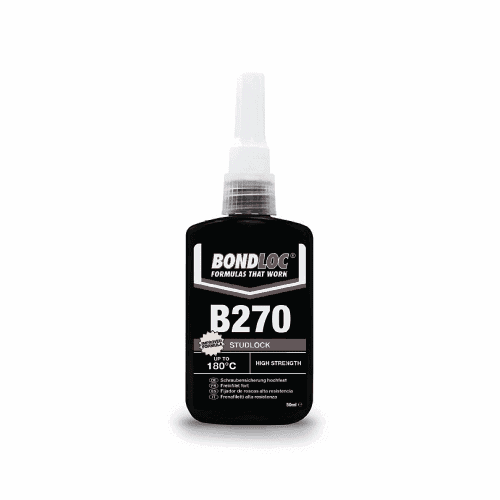
Buy here: Anaerobic adhesives, i.e. thread adhesives
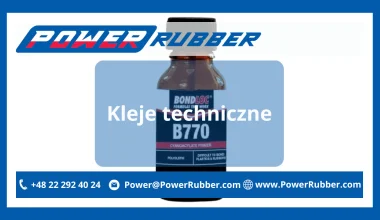
BondLoc thread protection
Due to very high bolt loads, measures preventing thread loosening must meet the highest standards. Bodloc anaerobic adhesives are used to protect threaded connections against spontaneous loosening. The product fills microgaps between mating threads and cures in conditions of limited air access, in contact with metal. In this way it helps secure the connection against loosening caused by vibrations and loads.
To achieve the correct effect, surfaces should be properly prepared before applying the product. Threads should be clean and their surface thoroughly covered with the adhesive. Oil residues and some cleaning agents may interfere with the curing process.
When choosing a Bodloc anaerobic adhesive, the type of connection and its operating conditions should be taken into account. Important factors include the required locking strength, temperature resistance, and the possibility of later disassembly. These parameters should be selected based on the specifications of the specific product.
Types of screws
What is a screw?
A screw is, simply put, a threaded fastening element. These products have wide applications in the construction industry as well as in machine building. Screws differ primarily in size (diameter and length) and shape (i.e., the type of head). They are also categorized by the materials they are made of, such as stainless steel.
What is stainless steel?
Stainless steel is a steel alloy with a reduced carbon content characterized by resistance to corrosion from atmospheric conditions as well as from acids and bases at low concentrations. Thanks to these properties, stainless steel products are widely used wherever fastening elements are found.
The stainless steel alloys from which screws, threaded rods, nuts, and washers are made owe their resistance and strength to their chemical composition. They contain at least 10.5% chromium and at most 1.2% carbon. Due to this composition, the chromium contained in the steel reacts with oxygen resulting in a very thin, invisible, durable and corrosion-resistant layer of chromium oxide. The layer that forms has the ability to self-repair when damaged by external factors.
Compared to other medium-strength steel alloys, stainless steel is a clear leader.
Stainless steel is:
-
self-healing,
-
durable,
-
resistant to external factors.
Properties of stainless steel
- Corrosion resistance
- Heat resistance
- Stylish appearance
- Easy to clean
- Easy to machine
- Recyclable
- Favorable strength-to-weight ratio
The strength of a bolted joint is determined by the strength of the core. The strength of all screw elements must be at least equal. The screw material must be well processed, strong and above all ductile.
We cannot afford to use medium-strength screws in constructions. If we use a heavily loaded product working under fatigue or impact loads, it must be made of chromium or chromium-nickel structural steel; for elevated operating temperatures chromium-molybdenum steel is used.
Mass-produced screws are made on automatic forging machines. Screws are mass-produced on automatic forging machines; the appropriate diameter dimension is obtained by pushing the end of the screw blank through a die. The core of the screw intended for rolling must have the pitch diameter of the thread. During the thread forming process, the thread crest is formed by plastic flow of material extruded through the tool profile peaks. The desired semi-finished diameter is obtained by turning, drawing, or grinding. The thread is most often rolled or cut; the former is characterized by better static and fatigue strength of the core and is more resistant to wear. The height of heads of standard screws is 0.7 of the nominal diameter. Product strength testing occurs after cutting off the head and checking material density.
Mechanical properties of screws
Mechanical properties are determined by measuring the load-bearing capacity of screws. The properties of screws are exactly the same as the properties of the materials from which they are made. Their tensile strength usually ranges between 450–500 MPa.
In the steel symbol the value 1/10 of this strength is placed, for example writing C1-50 or A1-50. Chromium steels that can be hardened allow the tensile strength to be increased to 700–800 MPa. A typical example is steel C4-70 or C3-80. Most such elements are formed by plastic working. This increases their mechanical properties compared to the properties of the material. The greater the deformation, the greater the increase in strength. This means only that screws with a smaller diameter but subjected to greater deformation will have higher strength than screws with larger diameters.
The typical strength of cold-worked screws is 700 MPa. Hence the designation A2-70. If higher strength is required, the steel rods from which screws are made are drawn. This allows achieving screw strength on the order of 800 MPa. Such material is denoted by the symbol A2-80.
The production process includes:
-
cold forging,
-
turning, drawing or grinding,
-
thread rolling or cutting.
Rolling provides greater durability and wear resistance.
Typical material symbols:
-
C1-50, A1-50 – ordinary steel,
-
C4-70, C3-80 – improved steel,
-
A2-70 – rolled stainless steel,
-
A2-80 – drawn stainless steel.
Trapezoidal screws and nuts
Trapezoidal screws and nuts have wide applications in machine building. They are used wherever high positioning accuracy, self-locking, strength, and large screw loads are required. Depending on working conditions and environment, appropriate materials for the nut and screw are selected.
The best cooperation is achieved with a steel screw and a bronze nut, which has self-lubricating properties, extending life, preventing nut overheating and ensuring quiet operation of such a connection. In places with aggressive environments or where lubrication of the thread is not possible, plastic nuts can be used.
The nut material is selected for specific conditions. It is worth emphasizing that the trapezoidal thread is self-locking. The strength of the nut mainly depends on its height; the higher the nut and thus the longer the thread, the greater the load it can carry and the longer its service life. Thread wear of the nut is monitored by the reduction of clearance between the safety nut. In case of thread failure, the safety nut takes over the load.
Trapezoidal screws and nuts are used where the following are required:
-
positioning accuracy,
-
self-locking,
-
resistance to large loads.
The best pairing is a steel screw and a bronze nut – this provides:
-
self-lubricating properties,
-
quiet operation,
-
resistance to overheating.
In aggressive environments, plastic nuts are used. Their durability mainly depends on thread height. When the nut wears out, an additional safety nut is used, which takes over the load in case of thread failure.
We guarantee professional technical advice. Please contact us by phone at +48 22 292 40 24 or +48 505 16 03 03, or by email (Power|PowerRubber.com| style="background-color: rgb(255, 255, 255); color: rgb(0, 91, 171); border-bottom: 1px dotted rgb(0, 91, 171); text-align: justify;"|Power|PowerRubber.com) or via our contact form.