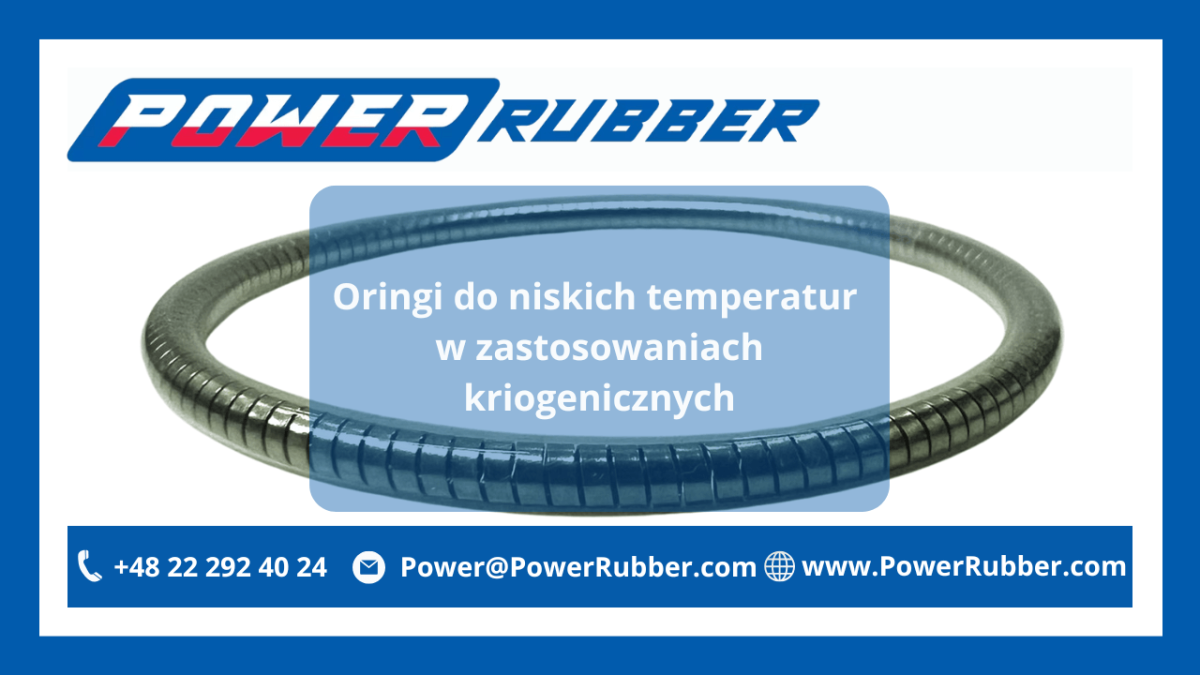
Orings for low temperatures in cryogenic applications
Rubber O-rings are used in various branches of industry. Some sectors require seals to perform well in demanding low-temperature conditions. Cryogenic applications most often concern working environments where the temperature falls below -150° C. They often involve substances such as: liquid nitrogen, refrigerants and hydrocarbons with low freezing points.
Cryogenic seals must ensure safety and reliable operation without the risk of leaks. Low-temperature O-rings are of great importance in various industries that use cryogenic processes, including the pharmaceutical, aerospace, medical, food (including dairy), oil and gas, petrochemical industries, as well as chemical processing and defense.
Cryogenics – What is it?
Cryogenics deals with the study of material behavior at extremely low temperatures that affect changes in their chemical properties. Cryogenic liquids that can be very dangerous include, among others, oxygen, nitrogen, helium, methane and argon. Working at cryogenic temperatures carries the risk of explosion and fire due to the rapid spread of flammable liquids. Contact with a cryogenic liquid poses a potential life-threatening hazard. Cold gases and vapors released from cryogenic liquids can cause skin injuries, pose an asphyxiation hazard or release dangerous toxins (highly concentrated gases can be lethal). O-rings in cryogenic applications should take these critical concerns into account.
The low-temperature tolerance of seals used in cryogenic applications must be significantly lower than for standard O-rings. Liquid nitrogen is used in medicine (cryosurgery, cryotherapy), metalworking, food freezing, while liquid oxygen is used in the petrochemical industry. Among cryogenic fluids are also liquid helium (NMR scanners) or liquid methane (vehicle fuel). It should be remembered that the use of liquid nitrogen and liquid helium concerns boiling at very low temperatures (below -153° C).
Cryogenic applications include situations in which the temperature drops below -150° C to –460° C (absolute zero). Special vessels that provide excellent thermal insulation are required for storing liquefied gases (including nitrogen and helium). All information and recommendations regarding the storage of cryogenic liquids must be strictly followed.
O-ring sealing rings for cryogenic applications
O-rings for cryogenic applications are specially designed sealing elements characterized by high performance at ultra-low temperatures. They are manufactured from materials that effectively prevent liquid leaks, retain their flexibility and sealing properties at extreme temperatures below -150° C.
Conventional materials lose flexibility and become brittle at such low temperatures, which in turn leads to seal damage and leakage. At Power Rubber we offer O-rings resistant to extreme cold while maintaining flexibility and resilience. The choice of the appropriate material and its compatibility with cryogenic fluids are crucial.
Effect of low temperature on O-rings
O-rings with a circular cross-section used in applications exposed to low temperatures can degrade. Low temperature can reduce sealing performance. Elastomer products in contact with low temperature may contract, which in turn affects the reduction of their compression capability and may lead to leakage. When the low temperature limit is exceeded, rubber products harden, becoming less flexible and more brittle. This will interrupt O-ring performance and they will begin to leak. To prevent failures resulting from operation in a low-temperature environment, various tests are carried out to determine how specific rubber compounds behave at low temperatures. Chemical compatibility combined with appropriate physical properties and material resistance to extremely low temperatures is the key to producing efficient O-rings.
Glass transition temperature and brittleness point of O-rings
One of the important parameters when selecting an elastomer for cryogenic applications is the glass transition temperature (Tg). After it is reached the material loses flexibility and becomes glassy, so an appropriate margin relative to the operating temperature should be taken into account when designing the seal. The brittleness point, which defines the temperature below which the material may become prone to cracking and mechanical damage, is also important.
Seal performance testing
The factor that has the greatest impact on the flexibility of elastomer products is operation at low temperature. As temperature decreases, the flexibility of rubber (depending on the compound) gradually decreases until it completely loses that property. O-rings that remain flexible at low temperatures provide proper sealing performance. The performance of O-rings intended for low-temperature applications is measured using standard tests to assess the physical properties and material performance.
Tests are performed for:
-
brittleness (ASTM D2137)
-
temperature retraction (ASTM D1329)
-
compression set (ASTM D395)
Performance tests are carried out to ensure the appropriate performance of sealing rings operating in a low-temperature environment.
Brittleness
As a result of operation at low temperature, the brittleness of rubber products increases. Increased brittleness can lead to cracking, tearing or damage to the O-ring. For this purpose, a brittleness test (ASTM D2137) is performed, which measures the resistance of O-rings to cracking after being bent and subjected to a specified temperature for a specified time. This method determines the lowest temperature at which rubber products do not degrade due to cracking.
Temperature retraction
ASTM D1329, also known as the TR test, is performed to measure the temperature at which frozen, vulcanized elastomer products return to an elastic state. The method is used to assess the effects of crystallization and to compare the properties of rubber products during the temperature retraction process.
Compression set
The performance of O-ring sealing rings can be tested by exposing them to low temperatures and checking what happens when the temperature is raised. ASTM D395 checks how the material behaves under prolonged compression and its ability to recover its original cross-sectional thickness. A low compression set of the material indicates that it recovers its original cross-sectional thickness after prolonged compression, and thus demonstrates better sealing ability. Under prolonged compression, elastomers do not fully recover their original thickness.
O-rings for cryogenic applications - What to pay attention to?
As mentioned earlier, there are four groups of health hazards associated with cryogenic liquids. These are extreme cold, asphyxiation, toxicity and flammability. Traditional elastomers undergo a glassy transition at low temperatures, which results in the rubber becoming brittle, and any additional material stresses can cause cracking. In view of the above, chemical compatibility of materials that come into contact with cryogenic liquids is an extremely important element. For efficient sealing, elastomeric materials must be compatible with the media they come into contact with.
Thanks to the constant development of polymer engineering, many materials have extended their operating temperature ranges and do not contract in low-temperature applications. Each material has its lower limit of operating temperature. The proper choice of material from which seals are made is crucial in cryogenic applications. O-ring seals intended for low temperatures must also meet a number of other important properties, such as: resistance to most chemicals, mechanical properties, good resistance to pressure spikes. O-rings for cryogenic applications must be designed in such a way as to prevent fluid leakage.
PTFE O-rings
A popular choice is the use of polytetrafluoroethylene (PTFE) O-rings filled with various polymers. These polymers include polyamides and very high molecular weight polyethylene (UHMWPE) materials. Polyethylene materials are odorless and non-toxic. They are characterized by chemical compatibility, low coefficient of friction, resistance to extrusion and excessive wear. The combination of PTFE with various polymers provides sealing effectiveness across a wide temperature range.
PTFE seals are used wherever other sealing materials do not meet requirements for temperature range, exceptional chemical resistance, friction and wear. PTFE technical seals are used in the aerospace industry and in laboratory situations. Despite a poor compression set, they are suitable for use in demanding conditions, extremely low temperatures down to -200° C in combination with very aggressive media. PTFE is used at cryogenic temperatures to hermetically seal media such as: liquid nitrogen (-196 °C), liquid hydrogen (-253 °C) and liquid helium (-269 °C).
The material offers high-quality resistance to almost all industrial chemicals, with the exception of alkali metals, fluorine and several fluorochemicals (chlorine trifluoride and oxygen difluoride). PTFE O-rings are compatible with acids, bases and solvents. Due to the low coefficient of friction, they do not require lubrication during installation. At cryogenic temperatures they do not crumble and retain their bending properties. PTFE has an exceptional ability to resist material degradation, thermal aging and changes in physical properties during temperature cycles. The material does not swell due to water absorption and also offers durability in contact with UV radiation. It is suitable for contact with food and meets FDA requirements.
O-rings in FEP/PFA jacket
Seals in FEP/PFA jackets consist of an elastic core that provides even sealing fit and a seamless coating of high-quality fluorinated plastics that guarantees reliable fluid sealing. O-rings in a seamless FEP or PFA jacket are resistant to most solvents and chemicals, providing long-lasting fluid sealing. They are also characterized by a very low coefficient of friction.
Jacketed sealing rings can have two types of elastomer cores: solid and hollow. A solid elastomer core can be made of FKM (Viton®) or silicone (VMQ). An FKM elastomer core offers excellent flexibility and a good compression set. O-rings with a silicone jacketed core, in addition to the above properties, are soft and exhibit greater heat resistance. A silicone core remains flexible in contact with very low temperatures.
A hollow elastomer core is mainly intended for applications where extreme flexibility is required. A closed elastomer core can be made from a material with FDA approval, making it suitable for use in the food and pharmaceutical industries and other applications that require hygiene.
The external PFA jacket is chemically resistant to various corrosive substances (including alcohol, acids, crude oil and aromatic solvents). It is characterized by low compression and an operating temperature range from -60° C to +260° C.
The external FEP jacket has properties similar to PFA, however it shows greater mechanical strength and resistance to stresses and cracking. This type of material has weaker mechanical properties and a shorter service life than PFA. The operating temperature is in the range from -60° C to +205° C.
FEP/PFA jacketed O-rings are prone to scratching, so their use should be avoided in applications that come into contact with abrasive substances. They work well in static applications. Spring-energized seal versions intended for cryogenic applications are also available, which are resistant to extremely low temperatures down to -250° C.
Cryogenic O-rings – Applications
The use of liquid nitrogen in cryogenic seals is intended for operation at temperatures from -196° C, while in applications with liquid hydrogen down to -254° C. Cryogenic fluids also include liquefied natural gas, liquid oxygen and helium. Cryogenic O-rings are most often used in the aerospace and oil and gas industries. In aerospace, seals are used, among others, in rocket tanks and valves. They secure the gas mixture that is responsible for propelling the rocket. In the oil and gas industry, seals are used, among others, for transfer of liquefied natural gas (LNG) and liquefied petroleum gas (LPG). Below are information about other applications, here they are:
- pharmaceutical research
- magnetic resonance
- infrared telescopes
- cryogenic pumps
- special gas production
- LNG fuel systems and compressors
- radio astronomy
- special gas manufacturing
- aviation
- stem sealing of cryogenic valves
- infrared telescopes
- scientific instrumentation
More about technical applications of O-rings you can find here
Specialized cryogenic seals - advantages and benefits
Standard O-rings are not dedicated to cryogenic applications. Extremely low temperatures can cause them to reach the glassy state, which results in reduced flexibility and increased brittleness, which in turn leads to failure.
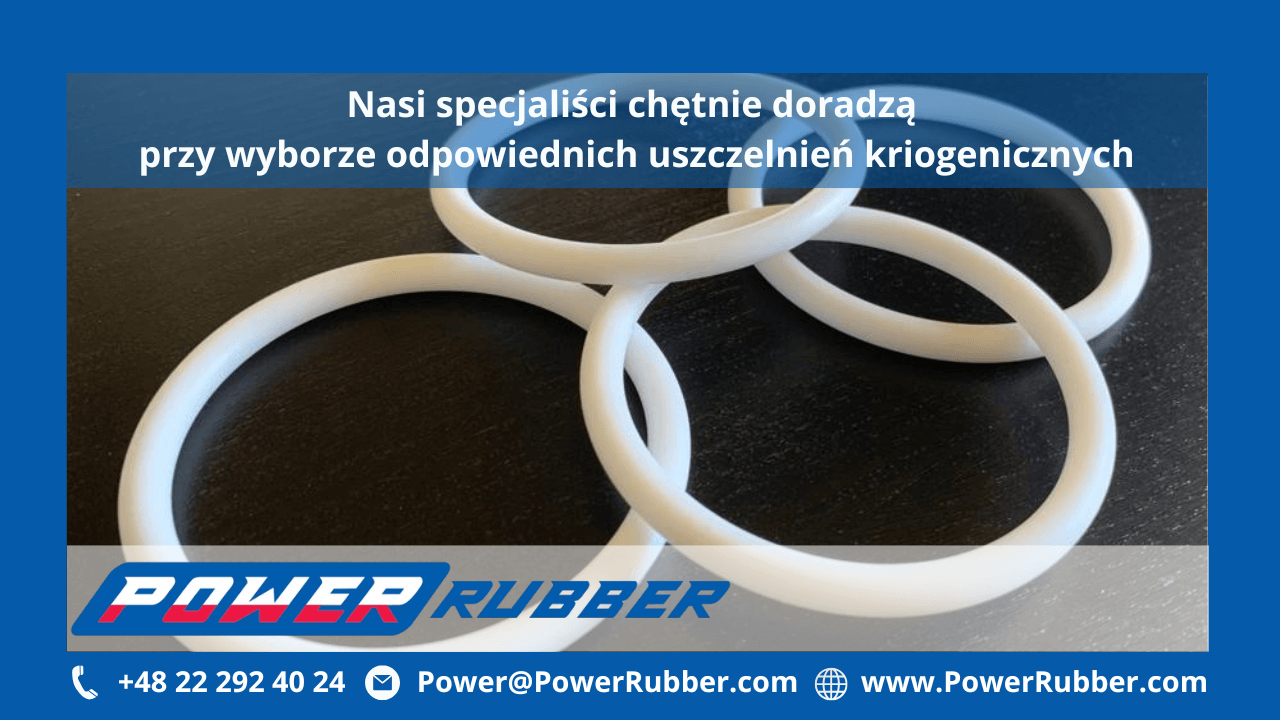
Cryogenic seals are specially designed to withstand extremely low temperatures. They seal dangerous cryogenic liquids, preventing leaks and ensuring reliable sealing between two mating surfaces. Materials intended for cryogenic applications are resistant to thermal shrinkage that causes potential leaks, brittleness that increases the risk of cracking and damage under pressure, as well as gas permeation. Our experts can provide guidance on the most suitable sealing for your cryogenic applications.
What to consider when choosing cryogenic seals?
When purchasing O-rings for cryogenic applications, attention should be paid to several quality indicators, including leak rate (the rate should be maintained at the micro range), proper packaging, ease of installation. Properly packaged seals prevent various contaminants (e.g. dust) from getting into them, which during installation can negatively affect the tight connection between the O-ring and the surface. Easy installation means less force is required to insert it between two surfaces. In this case, polymer seals have an advantage over metal seals.
Use our expertise and choose seals suitable for cryogenic applications. We invite you to contact us by phone: +48 22 292 40 24 or +48 505 16 03 03, by email (power|powerrubber.com| |Power|PowerRubber.com) or via our contact form.